Witness two million wildebeest cross the Mara River — Earth's greatest wildlife spectacle
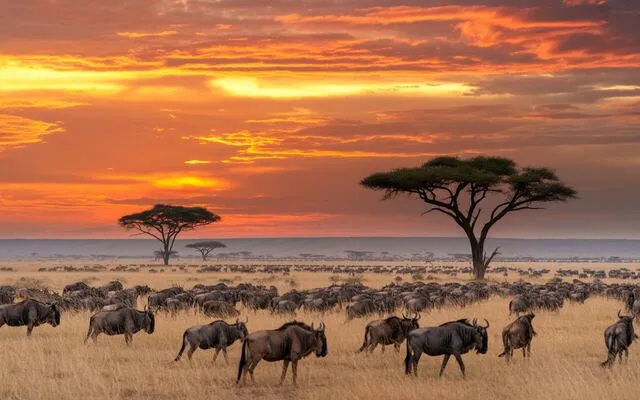
The Great Migration is, quite simply, the most spectacular wildlife event on the planet. Over 1.5 million wildebeest, 400,000 zebra, and 200,000 Thomson's gazelle make an epic circular journey of over 3,000 kilometres through the Serengeti-Mara ecosystem every year — following the rains, driven by an ancient instinct for survival. The journey never stops: from the calving grounds of the southern Serengeti in January to the dramatic river crossings of the Mara in July and August, this is a 365-day cycle of birth, death, and renewal that has played out for millennia. There is nothing else like it in the natural world.
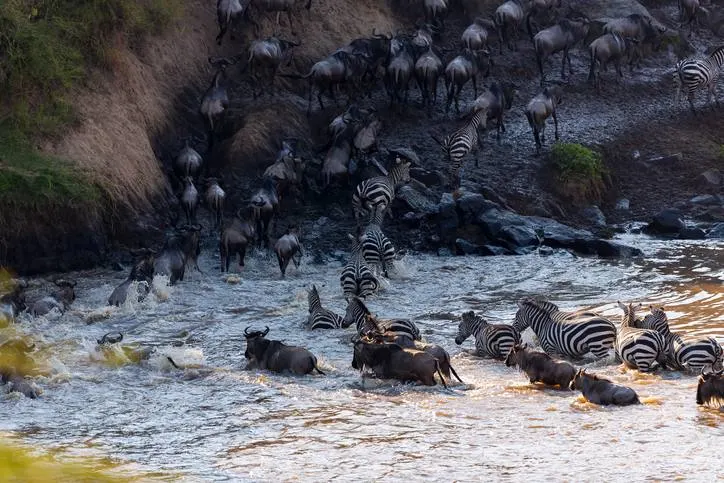
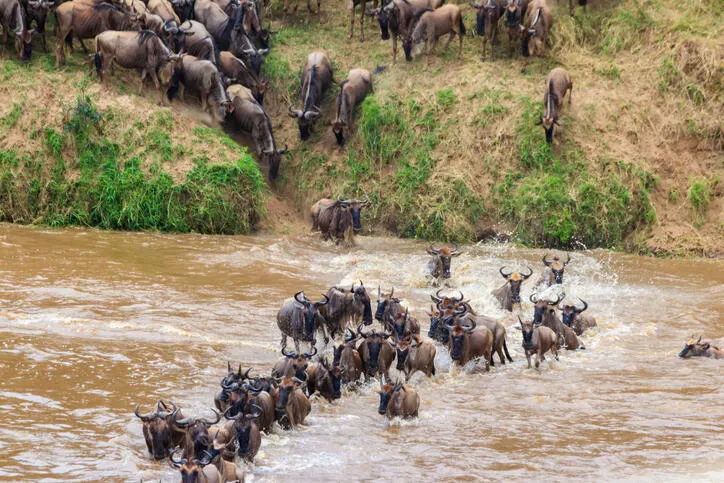
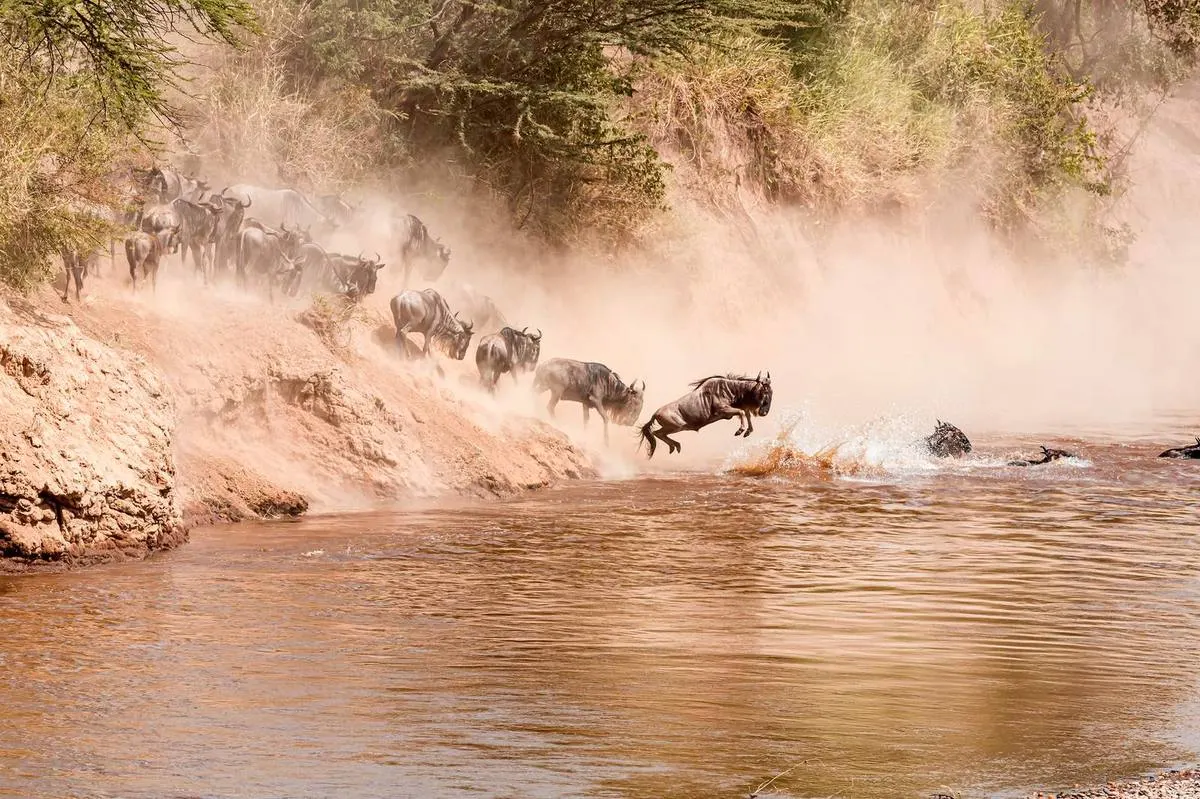
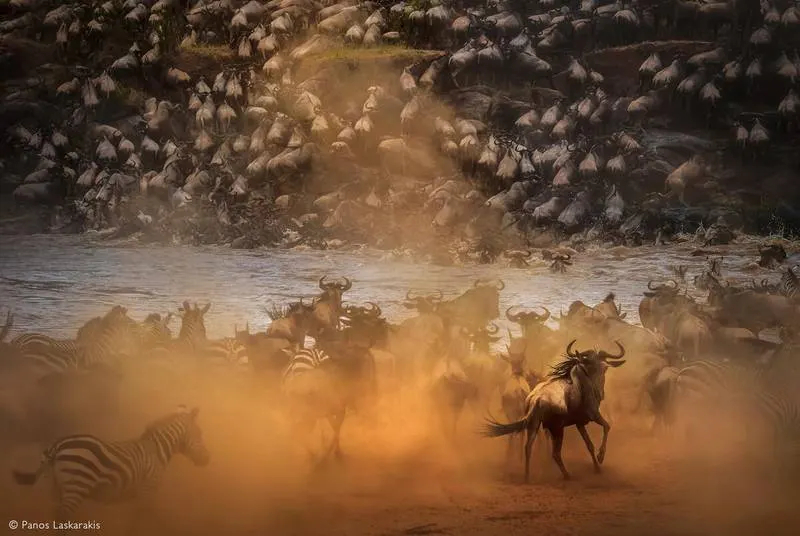
The Mara River crossings are the climax of the Great Migration — and among the most dramatic scenes in all of nature. Hundreds of thousands of wildebeest gather on the riverbanks, building courage before plunging into the crocodile-infested waters. The crossing itself is chaotic, visceral, and deeply moving. Massive Nile crocodiles launch from the shallows, lions wait on the far bank, and the thundering hooves of a million animals shake the earth beneath you. The crossings typically occur between late July and early September, though the exact timing is dictated by rainfall and herd behaviour. Staying at camps positioned near established crossing points maximises your chances.
Between January and March, the southern Serengeti and Ndutu plains become the world's largest maternity ward. Over 500,000 wildebeest calves are born in a synchronised burst — approximately 8,000 per day at peak. This abundance of vulnerable prey draws predators from across the ecosystem: lion prides, cheetah, hyena, and jackal all converge for what is arguably the best predator-prey action in Africa. It is a time of raw beauty and brutal honesty about the circle of life.
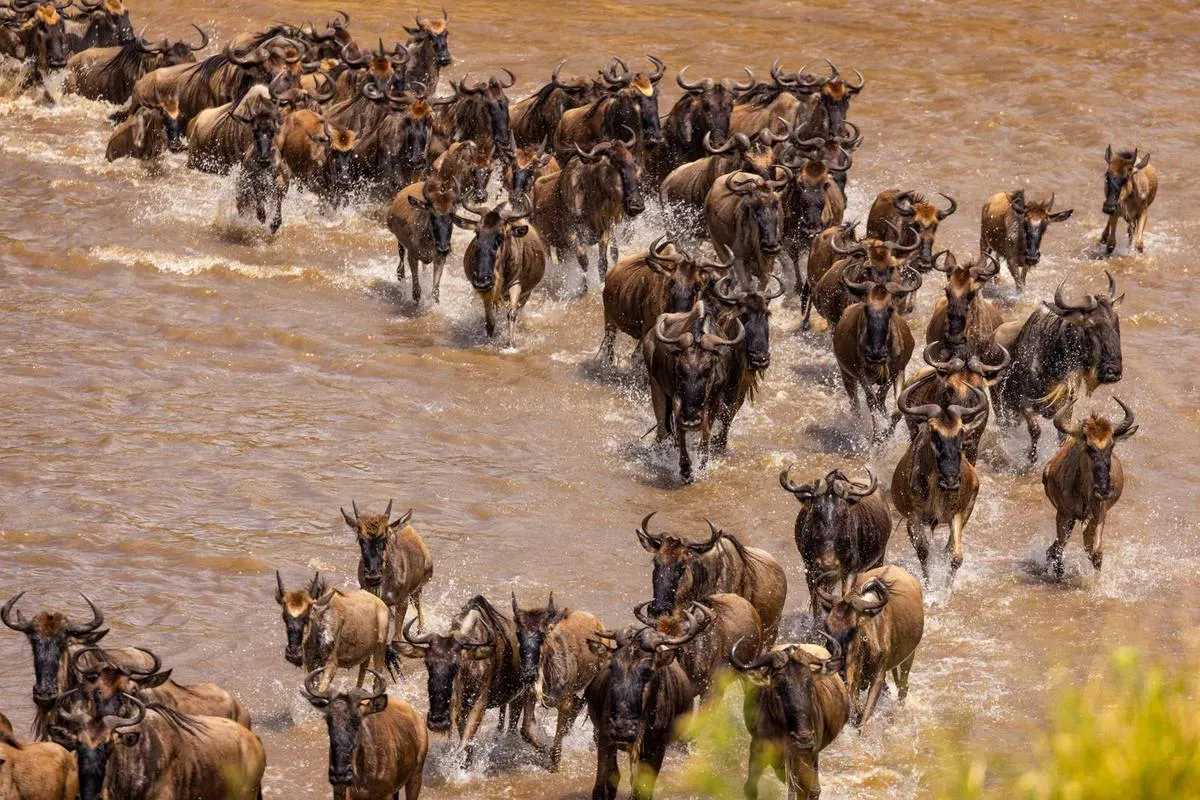
The Great Migration is the engine that drives the Serengeti-Mara's extraordinary predator populations. The Masai Mara alone hosts over 900 lions, 200+ cheetahs, and 3,000+ hyena — all sustained by the annual influx of prey. River crossings attract massive Nile crocodiles up to 5 metres long. For big cat enthusiasts, the migration creates unparalleled viewing: lions ambushing herds at night, cheetahs sprinting through the columns of wildebeest, and leopards watching from the safety of sausage trees.
Unlike most wildlife events, the Great Migration never stops. The herds are always moving, always somewhere in the Serengeti-Mara ecosystem. Our specialists can advise exactly where the herds will be during your travel window and position you at the best camps and lodges to intercept their path. Whether you visit during calving season (Jan–Mar), the western corridor crossings (May–Jun), the Mara River drama (Jul–Sep), or the return south (Oct–Nov), you will witness one of nature's great stories unfolding before you.
The 30,000 km² heart of the migration — from the calving plains of Ndutu to the northern river crossings at Kogatende.
The Mara's open grasslands host the herds from July to October. Private conservancies offer exclusive, low-density viewing.
Often combined with a migration safari — the crater's 260 km² floor hosts 25,000 resident animals including black rhino.
The western corridor where the herds cross the Grumeti River in May–June before heading north to the Mara.
Watch from a vantage point as thousands of wildebeest launch into the crocodile-filled Mara River — raw, unscripted, unforgettable.
Float above the endless herds at dawn — the Serengeti stretching to the horizon in every direction, the migration columns visible from a thousand feet.
Follow the migration in style with luxury mobile camps that relocate throughout the year to stay ahead of the herds.
Lions hunting in formation, cheetahs at full sprint, crocodiles launching from the river — the migration creates Africa's most intense predator-prey interactions.
Let our safari specialists craft a tailor-made great migration itinerary around your dates, budget, and dreams.