
Tours & Experiences
Begin Your Journey
Ready to Experience Pilanesberg?
Let our safari experts craft the perfect itinerary — tailored to your interests, pace, and budget.
Complete Guide
Your Complete Guide to Pilanesberg
Everything you need to know for planning the perfect Pilanesberg experience — from the best time to visit to insider tips.
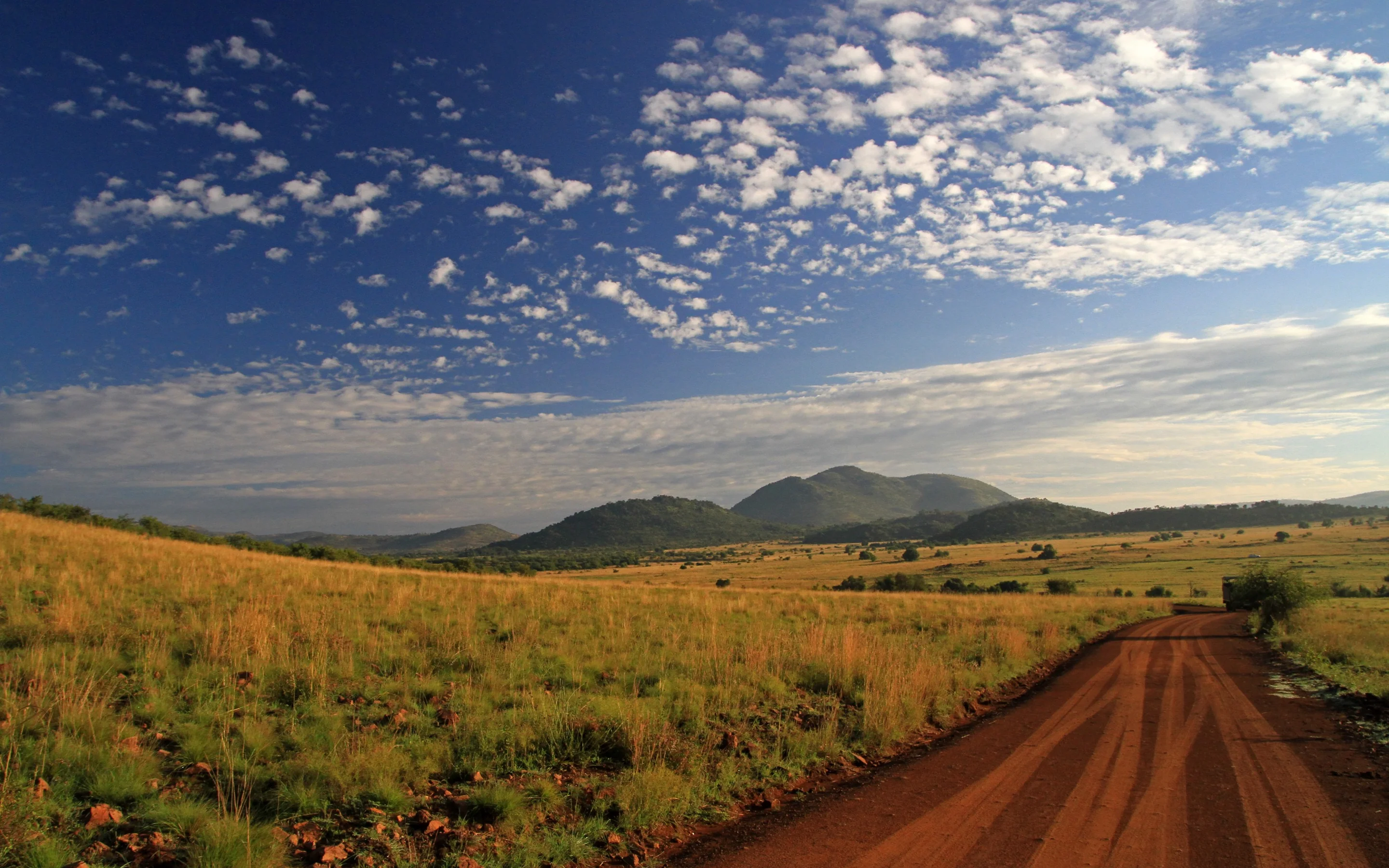
Pilanesberg National Park occupies one of the most geologically extraordinary settings in Africa — the eroded remains of a 1.3-billion-year-old alkaline volcanic complex, creating a series of concentric ring dykes that form natural amphitheatres of hills, valleys, and the central Mankwe Dam. At 55,000 hectares, it's one of the largest volcanic complexes of its type in the world, and its position in the transition zone between the Kalahari thornveld and the lowveld bushveld gives it a unique biodiversity found nowhere else in South Africa.
**Dry season (May – September)** is the optimal window for game viewing. As winter strips the deciduous woodland of its leaves, animals become dramatically more visible against the bare landscape. The grasslands thin, forcing herbivores — zebra, wildebeest, impala, kudu — toward Mankwe Dam and the reserve's smaller waterholes, where predators inevitably follow. Daytime temperatures are pleasant (18–24 °C) with cold mornings (3–8 °C) that keep mosquitoes at bay. June through August is the coldest and driest, while September heats up rapidly as the bush parches. This is peak game-drive season: lions, elephants, buffalo, and rhinos are regularly sighted, and the network of hides (bird-watching shelters) at waterholes offers patient visitors extraordinary close-up encounters.
**Summer (October – March)** brings the rains, transforming Pilanesberg into a vivid green wilderness with wildflowers, newborn animals, and migrant birds. Over 360 bird species have been recorded, and summer residents include the stunning lilac-breasted roller, Jacobin cuckoo, and lesser flamingo (which gather in thousands at Mankwe Dam). Temperatures reach 30–35 °C with afternoon thunderstorms that are often spectacular but brief. Summer is the most challenging for Big Five spotting due to dense vegetation, but the park's volcanic terrain means viewpoints along the ring dykes still offer open vistas. Lodge and hotel rates drop 15–25 % compared to peak.
**Pilanesberg is malaria-free** — a massive advantage over the Kruger lowveld, making it the closest Big Five, malaria-free safari destination to Johannesburg and Pretoria (just 2–2.5 hours by road). This makes it perfect for families with young children, pregnant travellers, and anyone who prefers to avoid prophylactics.
**Day-trip viability** is Pilanesberg's secret weapon. While a multi-night stay is ideal, the park's proximity to Johannesburg means you can leave your hotel at 05:00, be at Bakgatla Gate by 07:00 for a sunrise game drive, and return by evening. Several tour operators run guided day trips from Johannesburg and Pretoria (R2,500–R4,500 per person including park fees and lunch).
Frequently Asked Questions
Common questions about Pilanesberg tours and travel
Pilanesberg National Park is approximately 2–2.5 hours drive from Johannesburg (about 200km via the N4 highway). This makes it the closest Big Five safari destination to Johannesburg and perfect for day trips or weekend getaways. Our guided tours include hotel pickup from Johannesburg or Pretoria.
Popular Searches
Trending Pilanesberg experiences travellers are searching for
Pilanesberg Big Five safariPilanesberg from JohannesburgPilanesberg day tripPilanesberg sunrise game drivePilanesberg and Sun City comboPilanesberg hot air balloonPilanesberg family safariPilanesberg malaria-free safariPilanesberg guided safariPilanesberg weekend safariPilanesberg budget safariPilanesberg sunset game drivePilanesberg bush walkBest Pilanesberg safaris 2026Pilanesberg private safariPilanesberg accommodation
Explore More Destinations
Discover more incredible South African experiences