
Namibia Travel Guide
Complete 2026 Destination Guide
Africa's Last Great Wilderness — Where Desert Meets the Sea
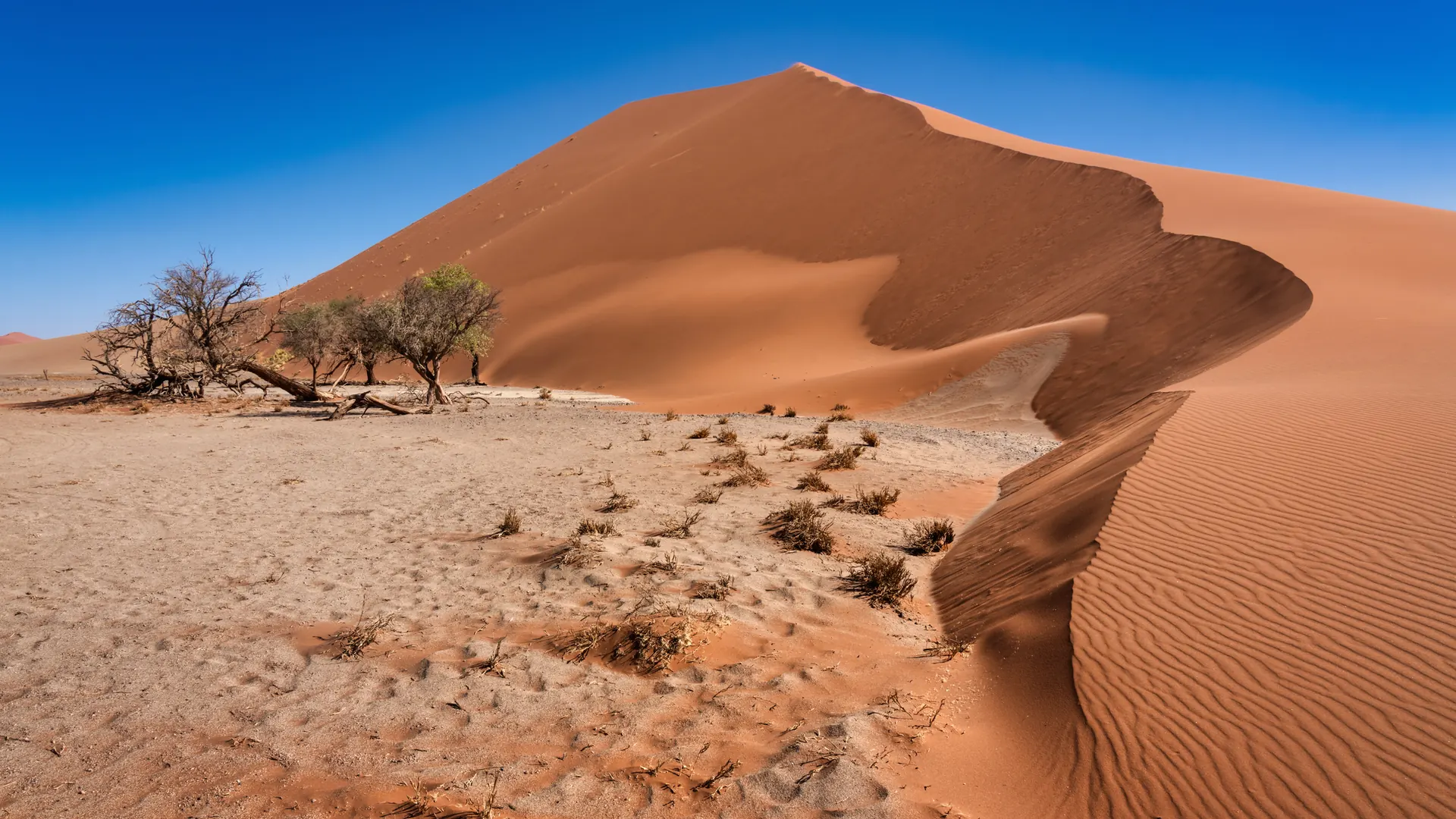
Namibia is Africa's most visually dramatic destination — a land of towering rust-red dunes, hauntingly beautiful skeleton coastline, and vast open plains stretching to infinity. Sossusvlei's iconic dunes (among the tallest on Earth at 300+ metres) glow at sunrise, the Skeleton Coast's shipwrecks emerge from Atlantic fog, and Etosha National Park's white salt pan creates surreal wildlife viewing as animals gather at floodlit waterholes. One of Africa's least populated countries, Namibia offers space, silence, and stargazing like nowhere else on the continent. Self-drive adventures through this cinematic landscape are a speciality — our Namibia packages combine desert, wildlife, and culture for extraordinary journeys.
Top Things to Do in Namibia
From world-famous wildlife spectacles to hidden gems — these are the experiences that make Namibia unforgettable.
Sossusvlei Sunrise
Watch Africa's tallest dunes glow crimson and gold at sunrise — the ancient clay pans of Deadvlei with their 900-year-old camelthorn trees are hauntingly beautiful.
Etosha National Park Safari
Game drive around a vast white salt pan — watch elephants, lions, black rhinos, and giraffes gather at floodlit waterholes for spectacular night viewing.
Skeleton Coast Expedition
Explore one of the world's wildest coastlines — shipwrecks, seal colonies, desert-adapted elephants, and eerie Atlantic fog create an otherworldly landscape.
Namibian Desert Stargazing
One of the darkest skies on Earth — the NamibRand Nature Reserve is Africa's only International Dark Sky Reserve. The Milky Way is breathtaking.
Damaraland Desert Elephants
Track rare desert-adapted elephants through ancient riverbeds — these remarkable animals have evolved to survive in one of Earth's harshest environments.
Swakopmund Adventure Hub
Sandboarding, quad biking, skydiving, and kayaking with seals — this German colonial coastal town is Namibia's adrenaline capital.
Namibia Safari Packages
Expert-crafted itineraries combining the best lodges, guides, and seasonal timing. All packages are fully customisable.
Best Lodges & Camps in Namibia
Hand-picked accommodations from ultra-luxury to premium — each one vetted and approved by our safari specialists.

Luxury under Africa's darkest skies

Where desert meets the Atlantic
Iconic Wildlife of Namibia
What you can expect to see — and where to find them.
Desert-Adapted Elephant
Namibia's desert elephants have adapted to survive in the Namib — they can go days without water and travel vast distances through dry riverbeds.
Black Rhinoceros
Namibia has the largest free-roaming population of critically endangered black rhinos — track them on foot in the Kunene region.
African Lion
Etosha's lions are famous for their dramatic waterhole ambush hunts — watch them from floodlit hides at night.
Cheetah
Namibia has the world's largest cheetah population — over 1,500. Farmland conservancies are key to their survival.
Cape Fur Seal
Cape Cross is home to one of the world's largest Cape fur seal colonies — over 200,000 seals in a noisy, chaotic spectacle.
Oryx (Gemsbok)
Namibia's national animal — the oryx thrives in the harshest desert conditions with its iconic straight horns and striking black-and-white face mask.
When to Visit Namibia
Every season offers something unique. Here's what to expect throughout the year.
Dry Winter
June – August
Cool & dry, 5–25°C. Clear skies, cold nights.
- Peak Etosha game viewing (waterholes)
- Comfortable temperatures for desert exploration
- Best stargazing conditions
Hot Dry Season
September – October
Hot, 15–35°C. Still dry, vegetation sparse.
- Excellent Etosha wildlife concentration
- Dramatic desert heat haze photography
- Whale season off Walvis Bay
Green Season
November – March
Hot, 18–38°C. Afternoon thunderstorms.
- Dramatic skies and lightning photography
- Baby animals in Etosha
- Lowest prices and fewest crowds
Autumn
April – May
Warm, 12–28°C. Rains ending.
- Sossusvlei at its most photogenic
- Lush landscapes after rains
- Excellent value with good game viewing
Visa Requirements
Visa-free for most Western nationalities (90 days)
Citizens of the US, UK, EU, Canada, Australia, and most Commonwealth countries receive 90 days visa-free on arrival. Simple stamp in passport.
💡 Tips
- •Passport must be valid for 6+ months with 2+ blank pages
- •Immigration may ask for proof of accommodation and return flights
- •If self-driving, have your rental agreement ready
- •Namibia is one of the easiest visa-free entries in Africa
Vaccinations & Health
⚠️ Required Vaccinations
- Yellow Fever (if arriving from endemic area)
💡 Recommended Vaccinations
🦟 Malaria Information
Malaria risk in the north only (Etosha, Caprivi Strip) during wet season (Nov–May). Southern Namibia, Sossusvlei, and Windhoek are malaria-free.
💡 Tips
- •Prophylaxis recommended only for northern regions (Etosha, Caprivi)
- •Sossusvlei, Swakopmund, and Windhoek are malaria-free
- •Namibia is one of the least malaria-affected safari countries
- •The dry climate means fewer mosquitoes overall
Currency & Money
🏧 ATMs
Widely available in Windhoek, Swakopmund, and major towns.
💳 Cards
Visa and Mastercard accepted at lodges, hotels, and supermarkets. Cash for fuel stations and markets.
💡 Tips
- •South African Rand (ZAR) is accepted everywhere at 1:1
- •Carry cash for remote fuel stations — cards sometimes don't work
- •USD accepted at tourist-facing businesses but at poor rates
- •Stock up on cash in Windhoek if heading to remote areas
Tipping Guide
Tipping is appreciated but Namibia is more relaxed about it than South Africa.
🦁 Safari Guide & Staff
N$100–200 per person per day for guides, N$50–100 for trackers/camp staff.
🍽️ Restaurants
10–15% for good service.
🚗 Transfers & Porters
N$20–50 for drivers. N$10 per bag for porters.
💡 Tips
- •NAD or ZAR preferred for tipping (both work at 1:1)
- •Safari camps usually have a communal tip box
- •Tip fuel attendants N$5–10 for windscreen wash
- •Self-drive? Tip your car rental handover guide
Safety
Namibia is one of the safest countries in Africa. Low crime rates, friendly people, and well-maintained roads make it ideal for self-drive safaris. The main risks are sun exposure and wildlife encounters.
💡 Tips
- •The biggest danger is driving — stick to speed limits on gravel roads
- •Never drive after dark (wildlife on roads)
- •Carry extra water — the desert is unforgiving if you break down
- •Watch for jackals, oryx, and kudu crossing roads
- •Windhoek is generally safe but use normal city precautions
- •Self-driving in Namibia is very safe — roads are well-marked
Travel Insurance
Travel insurance is essential, especially for self-drive adventures. Medical facilities outside Windhoek are very limited.
Must-Have Coverage:
- ✓Medical evacuation from remote areas
- ✓Vehicle excess cover (for self-drive rental)
- ✓Emergency medical treatment
- ✓Trip cancellation coverage
- ✓Windscreen and tyre damage (gravel roads!)
💡 Tips
- •CDW (Collision Damage Waiver) from your rental company is essential
- •Consider extra windscreen/tyre cover — gravel roads cause damage
- •Medical evacuation from Sossusvlei to Windhoek costs $3,000+
Language
Official Languages
English is the official language and widely spoken. Afrikaans and German are also common due to historical ties.
Useful Phrases
Getting There
✈️ Airlines Serving Namibia
💡 Tips
- •Most visitors connect through Johannesburg (JNB) or Doha (DOH)
- •Direct flights from Frankfurt (Condor/Eurowings Discover)
- •Windhoek airport is 45km from the city — book a transfer
- •Car rental pickup at the airport is the way to go for self-drive
Packing List
Safari Essentials
- ☐Neutral-coloured clothing
- ☐Quality binoculars
- ☐Camera + wide-angle lens (for landscapes)
- ☐Sunhat & buff/neck gaiter
- ☐Sunscreen SPF50+ (the sun is INTENSE)
Self-Drive Essentials
- ☐GPS/offline maps (Maps.me)
- ☐Extra water (5L+ per person per day)
- ☐Tyre repair kit
- ☐Torch/flashlight
- ☐Snacks for long drives between towns
Clothing
- ☐Layers — desert days are hot, nights are freezing
- ☐Warm jacket (Sossusvlei can reach 0°C at dawn)
- ☐Sturdy hiking shoes
- ☐Lightweight breathable fabrics
- ☐Swimsuit for lodge pools
Documents
- ☐Passport (valid 6+ months)
- ☐International Driving Permit (recommended)
- ☐Travel insurance documents
- ☐Car rental confirmation
- ☐Printed accommodation vouchers
Emergency Contacts
Namibia FAQs
More Travel Guides
Ready for Namibia?
Let our Namibia specialists handle every detail — from flights and visas to lodges and game drives.