The Serengeti Great Migration is one of the greatest wildlife spectacles on Earth, and for photographers it offers a rare combination of drama, scale and movement that changes with the seasons. Over a million wildebeest, joined by hundreds of thousands of zebra and gazelle, follow the rains across Tanzania’s Serengeti ecosystem and into Kenya’s Maasai Mara, creating ever-shifting scenes of life, danger and survival.
If you are planning a photography-focused safari, timing matters. The Great Migration is not a single event, but a year-round cycle of grazing, calving, rutting and river crossings. Each month brings different light, behaviour and landscapes, so the best time to travel depends on the images you want to create. Whether you dream of intimate newborn scenes in the south, dust-filled river drama in the west, or classic predator action in the north, this guide will help you choose the right window and the right location.
For travellers wanting a well-rounded itinerary that combines expert guiding with iconic migration viewing, the Serengeti Great Migration & Ngorongoro Crater — Tanzania's Greatest Show is a strong place to start, especially if you want to pair the migration with the crater’s superb wildlife density.
How to read the migration calendar
Before looking month by month, it helps to understand a key truth: migration timing is flexible. Rainfall drives the herds, and rainfall varies from year to year. That means the calendar below is a guide rather than a fixed timetable. You may find early movement one year and delayed crossings the next. Skilled local guides and flexible routing are essential, particularly for photographers who need to be in the right place at the right time.
The migration generally moves in a broad clockwise pattern through the Serengeti ecosystem. Herds begin in the southern short-grass plains around Ndutu and the Ngorongoro Conservation Area, then move west and north as the dry season progresses. By mid-year many reach the central and western corridors, while the famous Mara River crossings usually happen in the far north between July and October. After the first rains, the herds drift back south to calving grounds.
If your priority is the classic crossing shot, book with operators who can build flexibility into the itinerary. If your priority is storytelling, spend longer in one region and capture more than the obvious headline moment. For example, pairing the migration with a wider East Africa journey such as the Great Migration & Gorilla Trek — Tanzania & Rwanda Ultimate Combo can add powerful contrast between open plains and forest intimacy.
January to March: calving season in the southern Serengeti
From January to March, the herds gather on the short-grass plains of southern Serengeti and Ndutu. This is one of the best times for photographers who enjoy behaviour, atmosphere and high predator activity. The landscape is open, the visibility is excellent, and the soft light of the green season often creates rich tonal contrast. Calving usually peaks in February, when thousands of wildebeest calves are born each day.
For photography, this period is all about action and emotion. Newborn calves are wobbly and vulnerable, lionesses patrol the plains, cheetahs take advantage of open terrain, and hyenas remain ever-present. You can capture tender mother-and-calf moments, tense predator encounters and sweeping scenes of endless herds against dramatic skies. Because the ground is flat, compositions are clean and uncluttered, which is ideal for wide-angle work.
Practical tip: bring a versatile telephoto lens in the 100-400mm or 200-600mm range, plus a wider lens for environmental storytelling. Early starts are important, but so is patience. Predator action may unfold over hours, and the best image often comes after the first rush of activity has passed.
January to March is also a good time for fewer crowds than peak crossing season, which means more time with your guide and less pressure at sightings. If you want to explore the southern route in a broader East African context, a safari like the Zanzibar & Serengeti — Bush Meets Beach in East Africa can work beautifully, allowing you to end a powerful wildlife safari with a relaxing beach break.
Each month brings different light, behaviour and landscapes, so the best time to travel depends on the images you want to create.
April to May: the long rains and the western movement
April and May bring the long rains, and with them a different kind of photographic opportunity. The migration begins to move north-west through the central Serengeti towards the western corridor. Roads can be muddy and some camps may close or operate seasonally, but photographers willing to travel at this time are often rewarded with atmospheric skies, vivid green plains and very few other vehicles.
This is a season for texture and mood. Rain clouds can transform a plain into something cinematic, and the herds often appear even more impressive when framed by dark skies and fresh vegetation. Wildlife still remains active, though the behaviour is less concentrated than in calving season. You may spend more time tracking movement and less time at a single hotspot, which is why experienced guiding becomes even more valuable.
From a photography perspective, April and May favour storytelling over pure action. Think reflections in pools, elephants and giraffes in lush backdrops, and long, layered compositions of moving animals disappearing into the distance. Waterproof protection for your gear is essential, as are lens cloths, dry bags and patience.
If you like combining adventure with a broader Southern or East African travel palette, you might also look at contrasting landscapes elsewhere on the continent, such as the Masai Mara, Amboseli & Nakuru — Kenya's Big Cat Kingdom Safari or a city-and-nature break like the Private Tour: Cape of Good Hope, Table Mountain & Penguins before or after your safari.
June to July: the western corridor and the Grumeti challenge
By June, the rains ease and the migration moves into the western Serengeti and the Grumeti region. This is a transitional period, but for photographers it can be superb. The herds are more concentrated, the light is often crisp, and the first dramatic river crossings may begin at smaller channels before the larger, more famous Mara River crossings later in the year.
The Grumeti River is known for its own tension. Although less celebrated than the Mara, it can produce intense scenes as crocodiles wait in ambush and wildebeest bunch tightly at the banks. Because the action can happen quickly, it is important to be ready with camera settings dialled in before the moment arrives. Use a fast shutter speed, continuous autofocus and a steady hand, or a beanbag if shooting from a vehicle.
June and July are excellent months for mixed portfolios. You can capture herd movement, river drama, predators on the hunt and strong landscape images with golden dry-season grasses beginning to dominate. Morning and late afternoon light can be especially beautiful, creating warm tones and long shadows.
If you are building a larger safari adventure around your migration trip, consider pairing it with a more remote, exclusive experience such as the Luxury Botswana — Okavango Delta, Chobe & Victoria Falls Fly-In, which offers a contrasting style of water-based and floodplain photography.
August to October: the northern Serengeti and the Mara River crossings
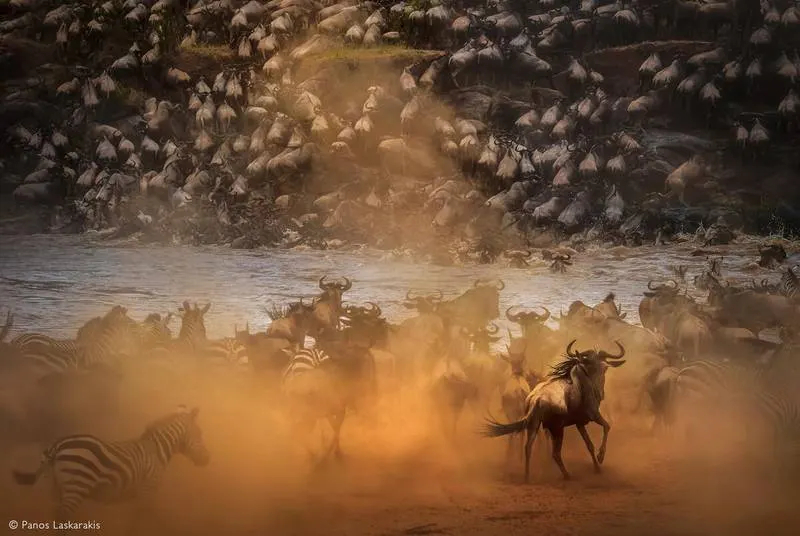
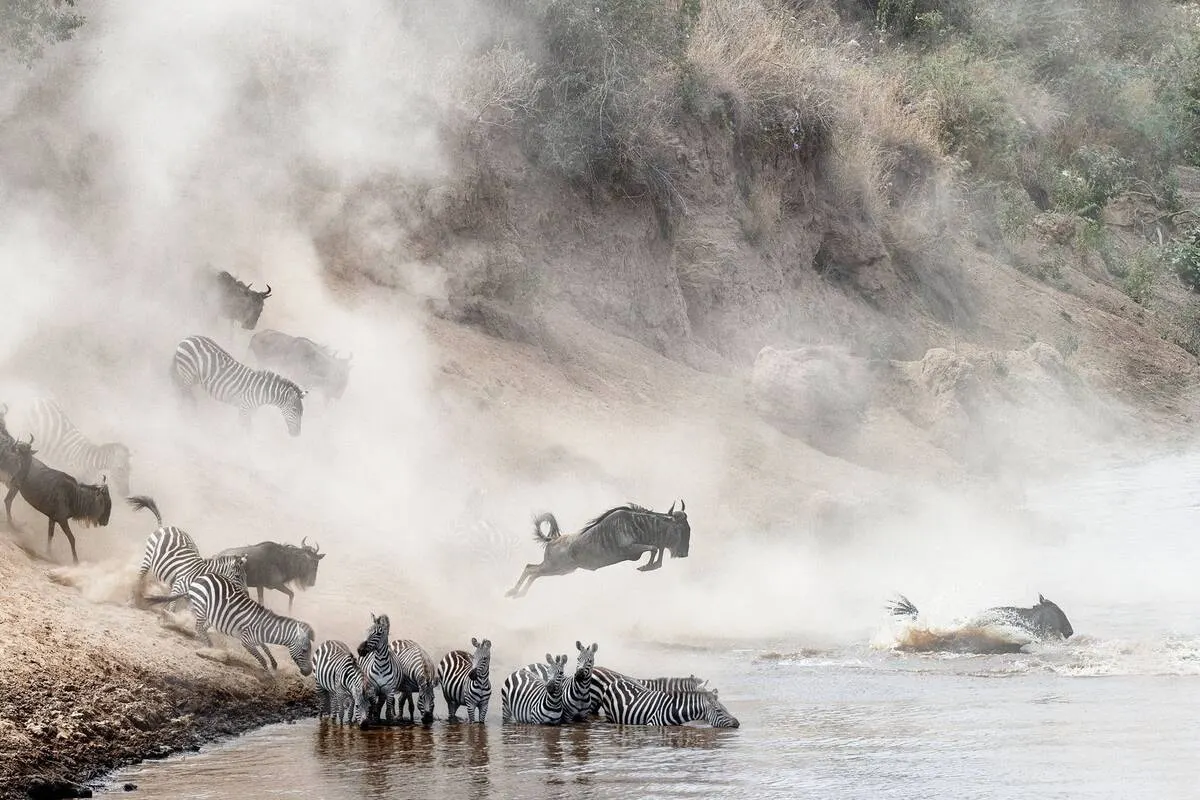
For many photographers, August to October is the ultimate migration window. The herds gather in the northern Serengeti and Kogatende area, where the legendary Mara River crossings take place. This is the season of suspense, chaos and unforgettable frames. Crocodiles lurk below, dust rises above the banks, and the sheer scale of the herds is breathtaking.
But crossing photography is not only about the leap. The best images often come before and after the crossing itself: animals milling nervously on the bank, calves hesitating, zebras scouting ahead, and the first bodies plunging into the river. The tension is what makes the story. Be prepared for waiting, and understand that some days may deliver no crossing at all. The most rewarding images often come to those who stay disciplined and observant.
During this season, a long lens is essential. A 300mm, 400mm or 500mm equivalent will help isolate behaviour across river channels, while a second body with a wider lens can capture the scale of the scene. Dust is part of the story, so protect your gear and expect your images to have a warm, textured look. Back-button focus and high burst rates are useful, but timing and anticipation matter more than camera specs.
Because this is peak season, camps and vehicles can be busier than at other times. Booking early is wise, especially if you want access to prime river viewpoints. The Serengeti Great Migration & Ngorongoro Crater — Tanzania's Greatest Show is particularly appealing here because it combines the high drama of the northern herds with one of Africa’s most productive wildlife areas.
November to December: the return south and green season renewal
After the short rains begin in November, the migration turns south again. The herds gradually leave the northern Serengeti and move through central areas towards the southern plains. By December the cycle is well underway, and the landscape begins to renew itself with fresh grass and softer, greener tones.
Photographically, this is a more relaxed and often underrated season. The migration is on the move, but there is still abundant wildlife and excellent photographic potential. The rains can create moody skies, dramatic cloud formations and beautiful post-storm light. If you enjoy quieter camps, greener landscapes and a less frenetic atmosphere, late year can be a very rewarding time to travel.
This is also an excellent period for broader East Africa combinations. If your photography interests extend beyond big game, a journey that includes mountain or cultural elements can add depth to your portfolio. For example, Mount Kilimanjaro — 7-Day Lemosho Route offers dramatic landscape photography opportunities, while a cultural stop such as the Cape Malay Cooking Class in Bo-Kaap — Cook Like a Local can add human storytelling to a wider African travel series.
Best photography tips for the Great Migration
No matter when you travel, a few practical habits will make a huge difference to your results. First, scout your route with your guide as much as possible. Understanding animal movement patterns, wind direction and light angles will help you anticipate action rather than react to it. Second, shoot with intent: include wide establishing frames, medium documentary shots and tight behavioural portraits so your final gallery tells a complete story.
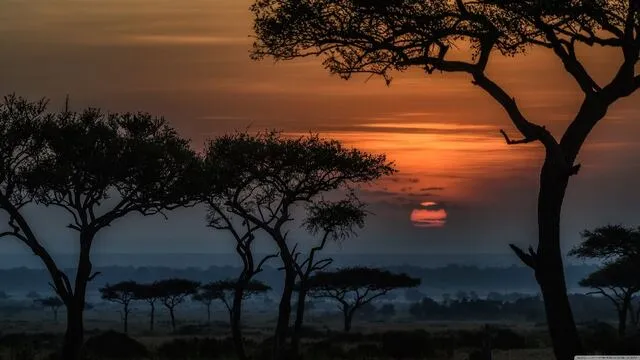
It is also worth thinking beyond the obvious. Not every compelling frame is a dramatic crossing. Some of the strongest migration images feature dust, silhouettes, restless calves, predatory eyes, or the quiet rhythm of movement across the plains. Use the landscape to strengthen your compositions. A lone acacia, a storm front, a riverbank, or a line of birds can all add structure and context.
- Use continuous autofocus and a fast burst mode for action scenes.
- Keep one lens ready for wide environmental shots and one for tighter behaviour.
- Protect your equipment from dust, rain and vibration on rough roads.
- Arrive early at key sighting areas and stay patient.
- Ask your guide to position the vehicle for light, background and angle, not just proximity.
If you are still refining your safari photography style, smaller African adventures can also be excellent practice. A day trip such as the Aquila Game Reserve Safari with Park Fees, Transport & Lunch or a scenic outing like the Full-Day Cape Peninsula Shared Tour can sharpen your eye for composition before a major migration journey.
When should photographers visit the Serengeti?
If your goal is calving behaviour and predator interaction, travel from January to March. If you want green landscapes, fewer vehicles and dramatic weather, April to May can be deeply rewarding. For river crossings and classic migration storytelling, plan for August to October. For a quieter, underrated experience with renewed scenery, consider November to December.
The truth is that there is no single best month for everyone. The best time depends on your photographic style. Do you prefer intimate wildlife behaviour, expansive landscape shots, or high-adrenaline action? Each season rewards a different approach. If you can be flexible, the migration offers something remarkable at almost any time of year.
For travellers who want a journey that feels both iconic and seamless, a package such as the Zanzibar & Serengeti — Bush Meets Beach in East Africa or the Great Migration & Gorilla Trek — Tanzania & Rwanda Ultimate Combo can turn a single wildlife trip into a richer, more diverse African story.
Plan your migration photography safari with purpose
The Serengeti Great Migration is not just a checklist of sightings; it is a living, shifting drama that rewards preparation, patience and curiosity. Photographing it well means understanding the rhythm of the seasons, choosing the right region, and working with guides who know how to read the land.
If you are ready to plan your own migration journey, think carefully about what kind of images you want to bring home. Calving season offers intimacy. The western corridor offers tension and transition. The northern Serengeti delivers high drama. Each month tells a different part of the same extraordinary story, and with the right timing, that story becomes your portfolio.
For a safari built around the Great Migration with expert wildlife access, start with the Serengeti Great Migration & Ngorongoro Crater — Tanzania's Greatest Show. If you want to broaden the journey further, consider adding a second destination such as the Masai Mara Private Conservancy — 5-Day Exclusive Safari or a beach finale through the Zanzibar & Serengeti — Bush Meets Beach in East Africa. The migration changes every month, but one thing remains constant: it is unforgettable through a photographer’s lens.
Tours & Safaris You'll Love
Handpicked by our team based on what you're reading. Book direct for the best price — guaranteed.
Serengeti Great Migration River Crossing — Mara River Safari
Witness the world's greatest wildlife spectacle — wildebeest crossing the Mara
per person • Best price direct
Masai Mara Great Migration Safari — River Crossing Season
Witness nature's greatest spectacle — millions of wildebeest crossing the Mara River
per person • Best price direct
Kruger Luxury Safari — Big Five Private Game Reserve
Exclusive Big Five encounters in Kruger's finest private concessions
per person • Best price direct
Kruger Full-Day Open Vehicle Safari
Expert-Guided Big Five Game Drive from Hazyview
per person • Best price direct
Why book with middlemen? Same tours, lower prices, direct support from our team.
Get a Free Custom Quote