Carcharodon carcharias
Apex Predator of the Deep
Habitat
Coastal waters, continental shelves, and around seal colonies
Diet
Carnivore
Lifespan
60–70 years
Weight
680–2,000 kg
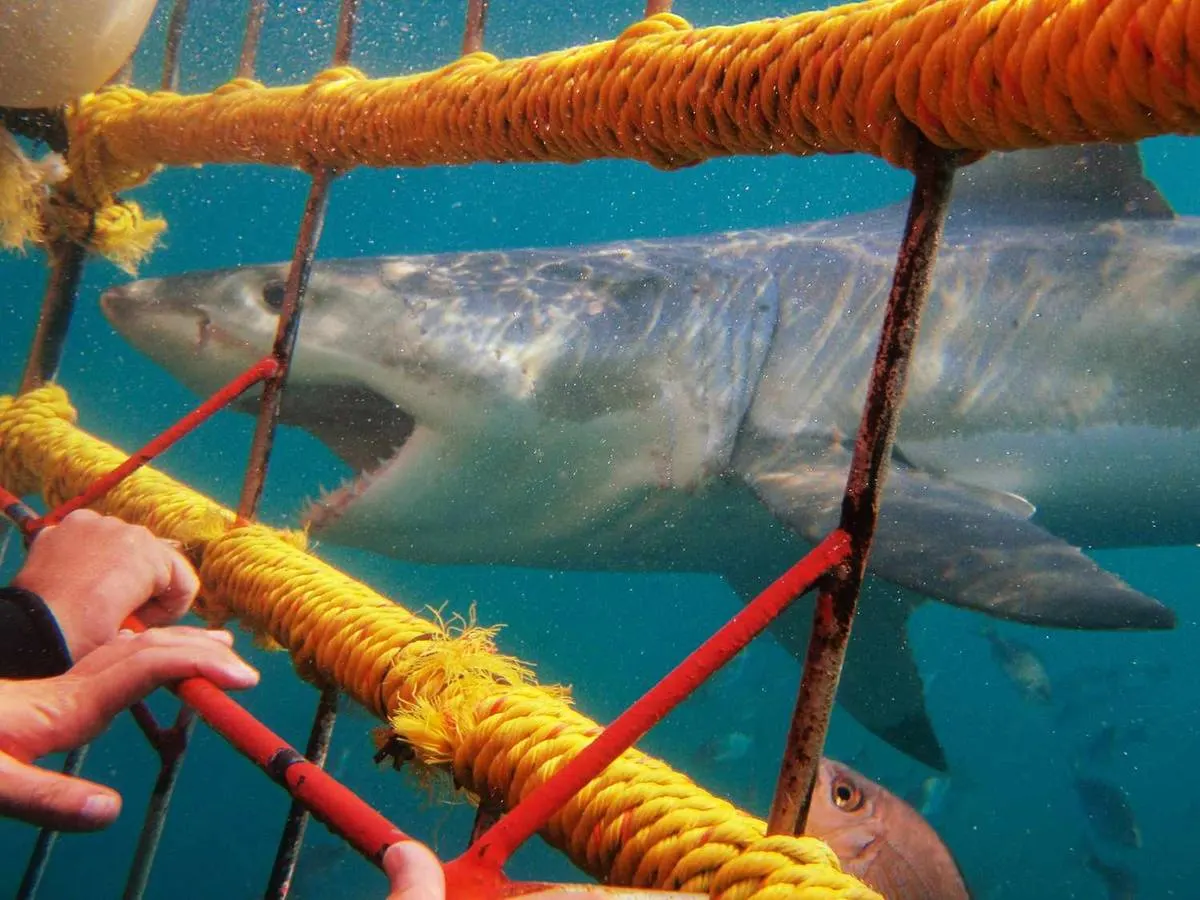
The Great White Shark is the ocean's most iconic predator, growing up to 6 metres long and weighing over 2,000 kg. South Africa is one of the best places in the world to encounter these magnificent animals, with hotspots along the coast from Gansbaai to Algoa Bay.
Cage diving has become a world-famous experience, allowing visitors to observe Great Whites at close range in their natural habitat. The Addo Elephant National Park's marine section in Algoa Bay includes Great Whites as part of its unique "Big Seven" concept.
Habitat
Coastal waters, continental shelves, and around seal colonies
Diet
Carnivore — seals, fish, rays, and other marine animals
Lifespan
60–70 years
Weight
680–2,000 kg
Great whites are generally solitary hunters but show surprising social complexity. They establish dominance hierarchies at feeding sites, with larger individuals asserting priority. Research off Gansbaai has revealed individual sharks returning to the same areas year after year, suggesting site fidelity and spatial memory. They communicate through body language — arching backs, gaping jaws, and tail-slapping the surface.
Population
Global population estimated at 3,000–5,000 individuals; significant seasonal concentrations along South Africa's coast
Gansbaai
Algoa Bay
Mossel Bay
False Bay
April to September (South African winter) for cage diving off Gansbaai and False Bay, when seal colonies attract sharks. Shark Alley between Dyer Island and Geyser Rock is the prime location. Summer months (October–March) see fewer sharks inshore.
Great Whites can detect a single drop of blood in 100 litres of water
They can breach completely out of the water when attacking prey from below
Their teeth regrow continuously — a shark may go through 20,000 teeth in its lifetime
They have a sixth sense — electroreception — that detects the electrical fields of other animals
Underwater cage photography requires wide-angle lenses (10–22mm) and fast shutter speeds to capture sharks emerging from blue water
Use natural light when possible — the dappled sunlight through water creates atmospheric images of approaching sharks
Shoot through the cage bars at an angle to minimize their appearance in the frame
Surface shots of breaching sharks require anticipation and burst mode — the explosive speed is over in a fraction of a second
Eye contact shots are most powerful — focus on the shark's distinctive black eye as it passes the cage
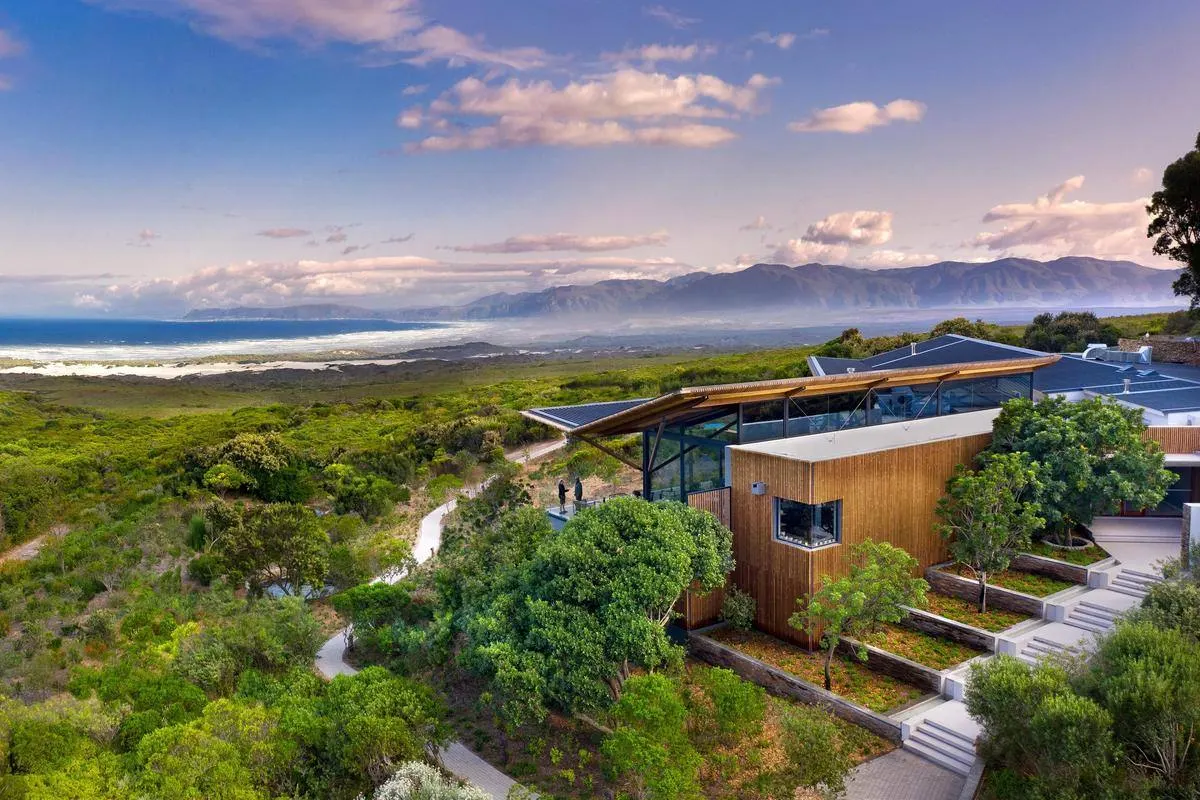
Luxury eco-lodge just minutes from Gansbaai's shark cage diving boats, combining marine Big Five experiences with fynbos and whale watching.
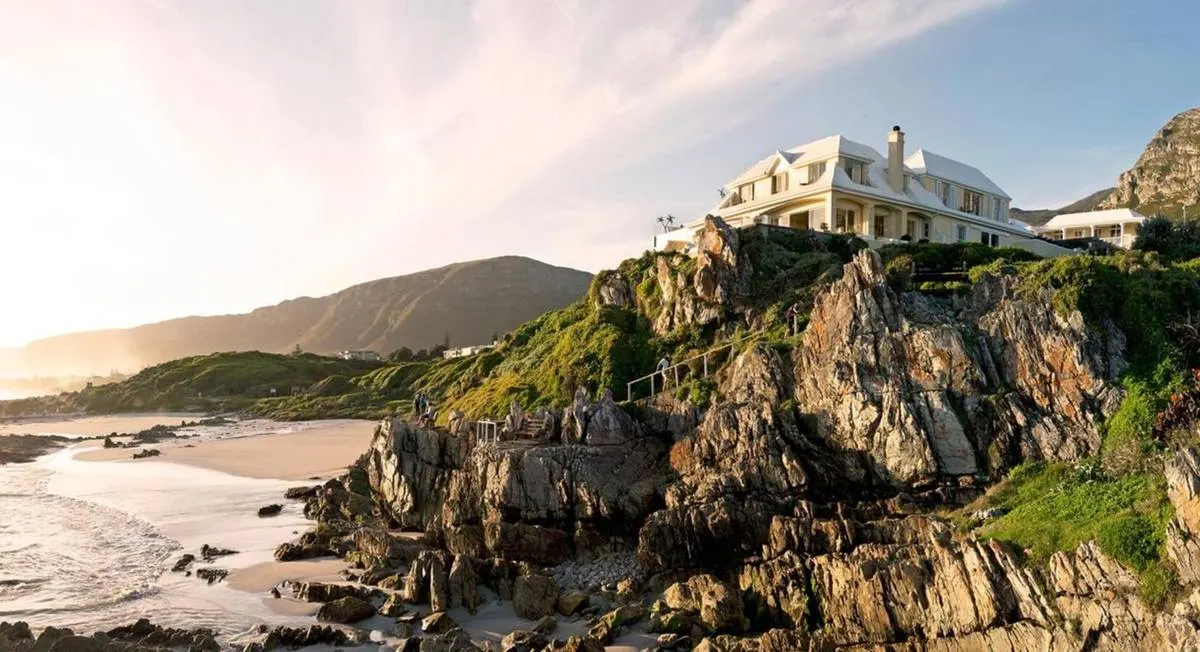
Boutique oceanfront luxury in Hermanus with easy access to shark and whale experiences along the Overberg coast.
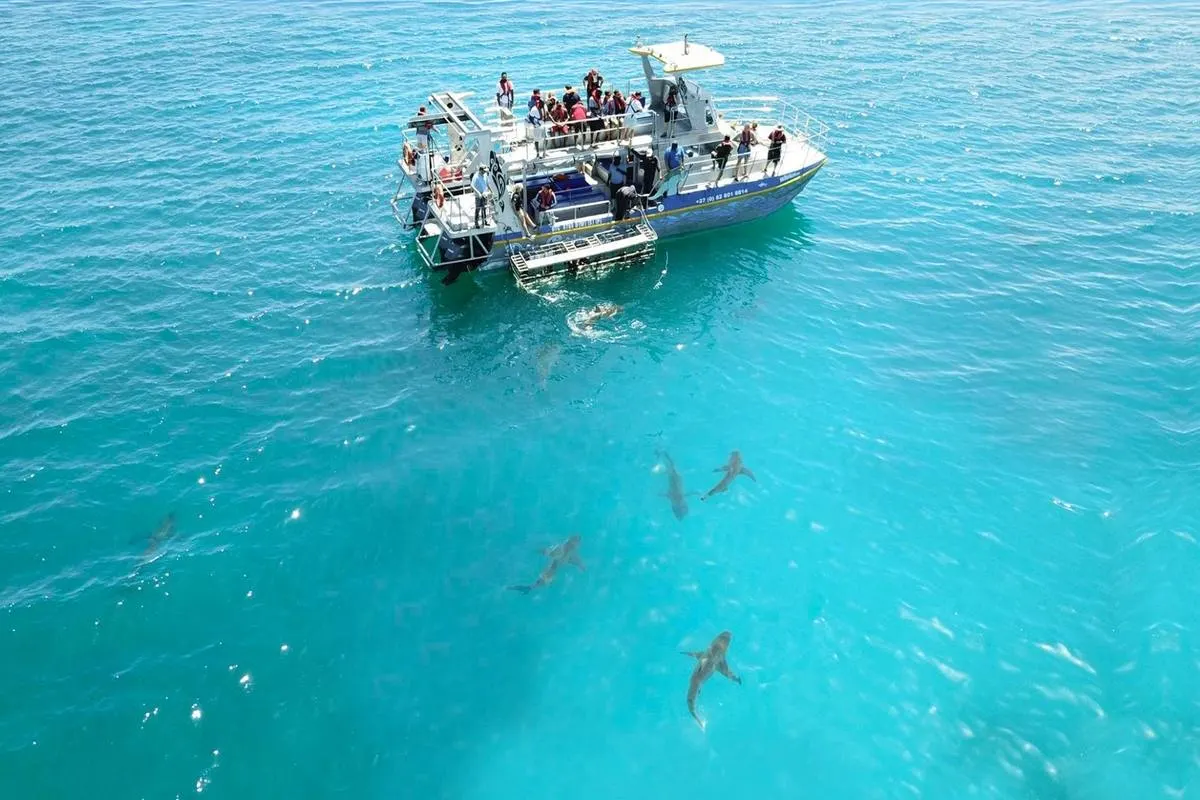
The leading marine biology-operated shark cage diving company, offering research-focused shark encounters with marine biologists as guides.
Orca predation displacing sharks from traditional territories
Bycatch in commercial fishing operations (longlines and shark nets)
Slow reproduction rate making population recovery difficult
Pollution and habitat degradation in coastal waters
South Africa was a pioneer in great white shark protection, listing them as protected in 1991. Marine Dynamics' Dyer Island Conservation Trust funds research and monitoring. The Shark Spotters Programme in Cape Town employs trained observers to warn swimmers and collect data. Research institutions use photo-ID, acoustic tagging, and satellite tracking to study movements and population dynamics.
Gansbaai, known as the "Great White Shark Capital of the World," is the premier cage diving destination in South Africa. Shark Alley, the channel between Dyer Island and Geyser Rock, concentrates great whites near a massive Cape fur seal colony. False Bay (Simon's Town) was also excellent until orcas displaced the sharks in 2017. Mossel Bay offers an alternative along the Garden Route.
Our expert safari consultants will craft your perfect great white shark encounter — from choosing the ideal reserve to selecting the best season and lodge.
Big Five game drives, walking safaris & more
Luxury accommodation in prime wildlife areas
Kruger, Sabi Sands, Masai Mara & beyond
Plan your trip around peak wildlife seasons
Honest pricing guide for every budget
How your safari protects African wildlife
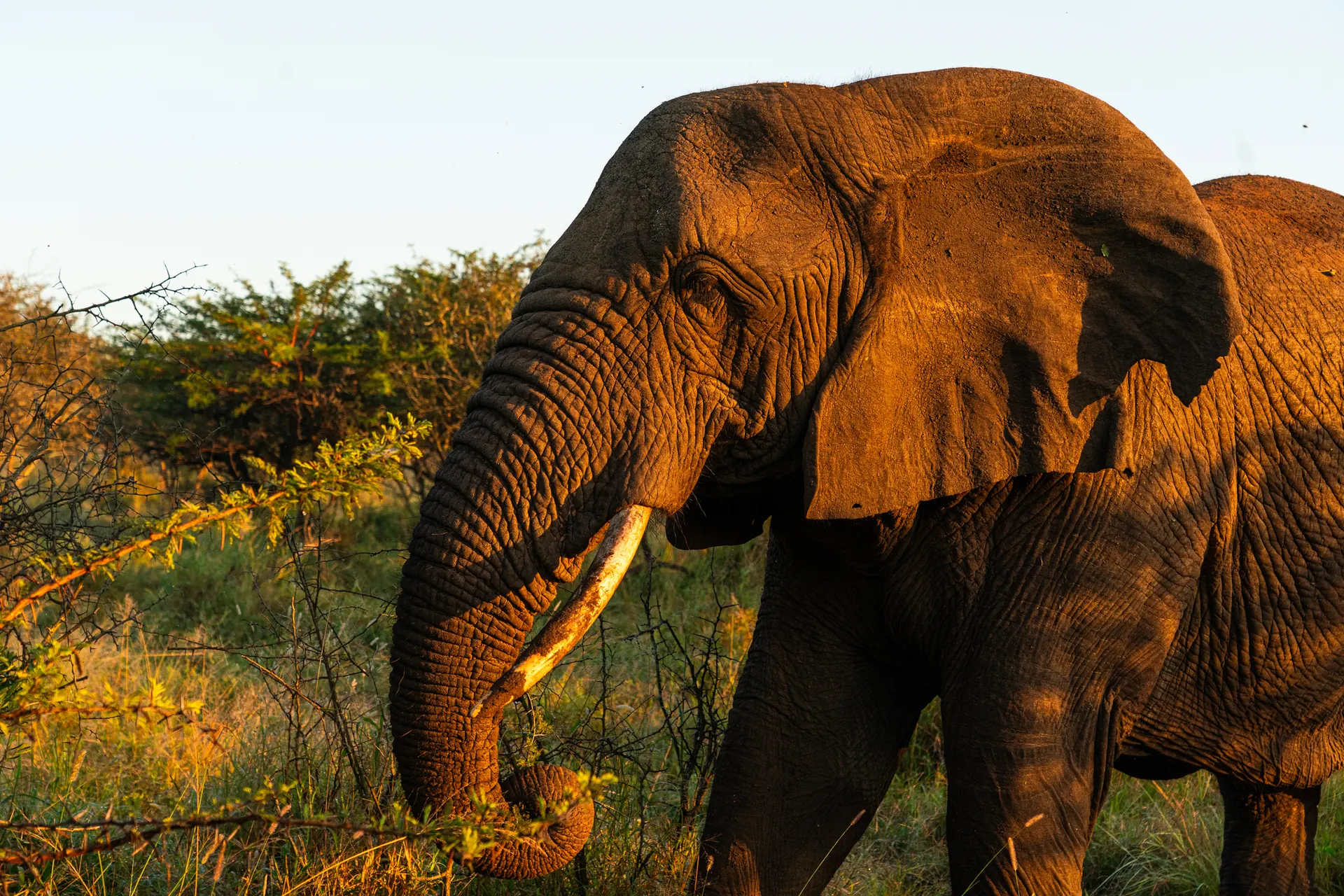
African Elephant
The Gentle Giants of the African Bush

African Lion
The King of the African Savanna
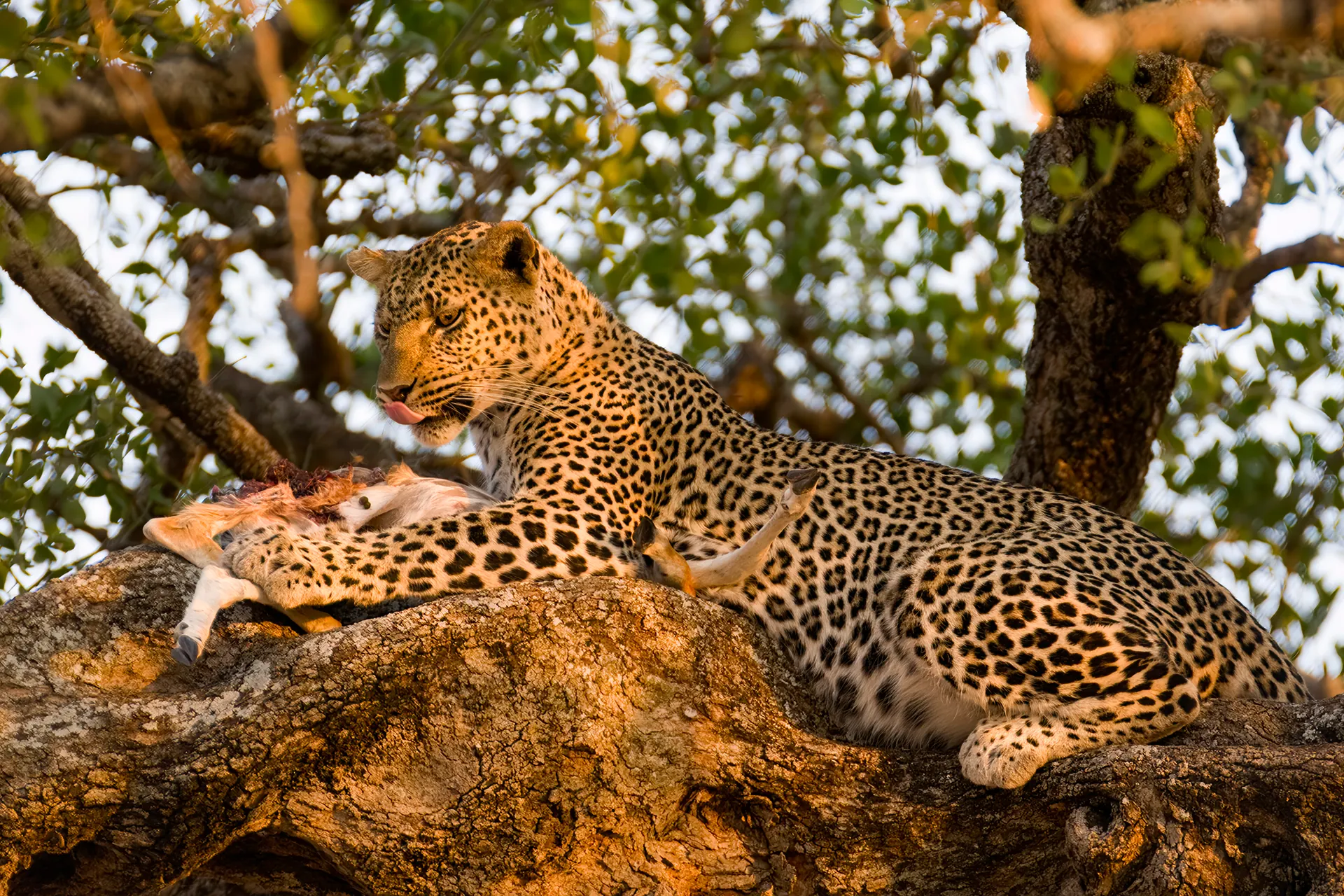
African Leopard
The Elusive Ghost of the Bush
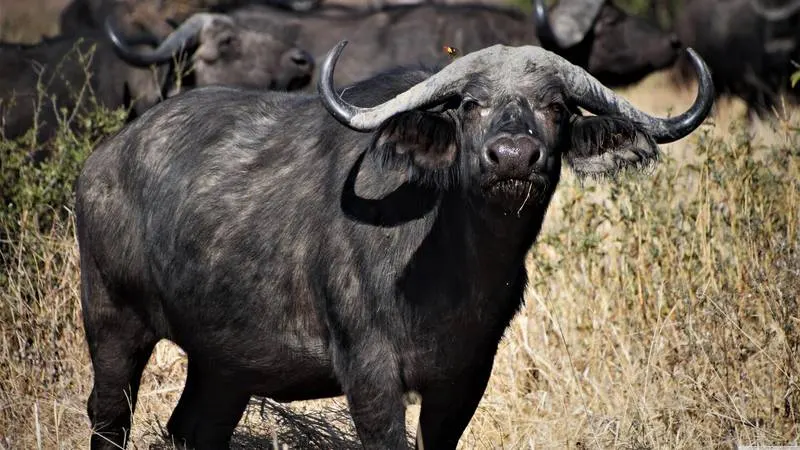
Cape Buffalo
Africa's Most Dangerous Bovine
White Rhinoceros
Guardians of the Grassland
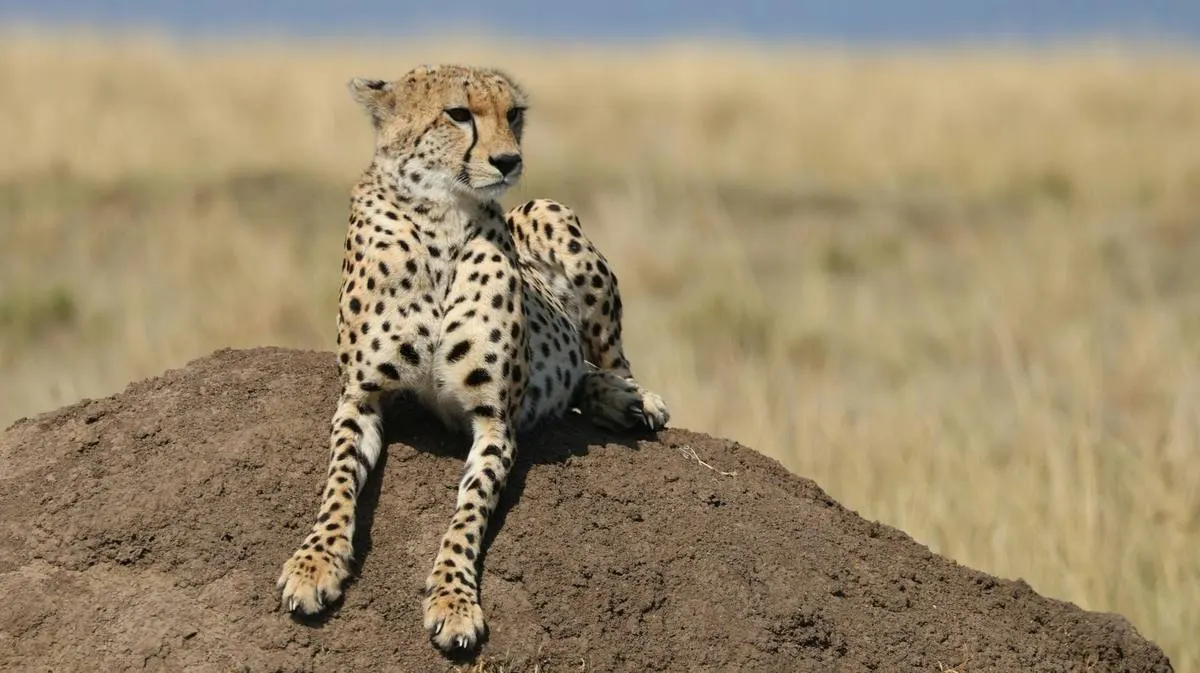
Cheetah
The Fastest Animal on Land
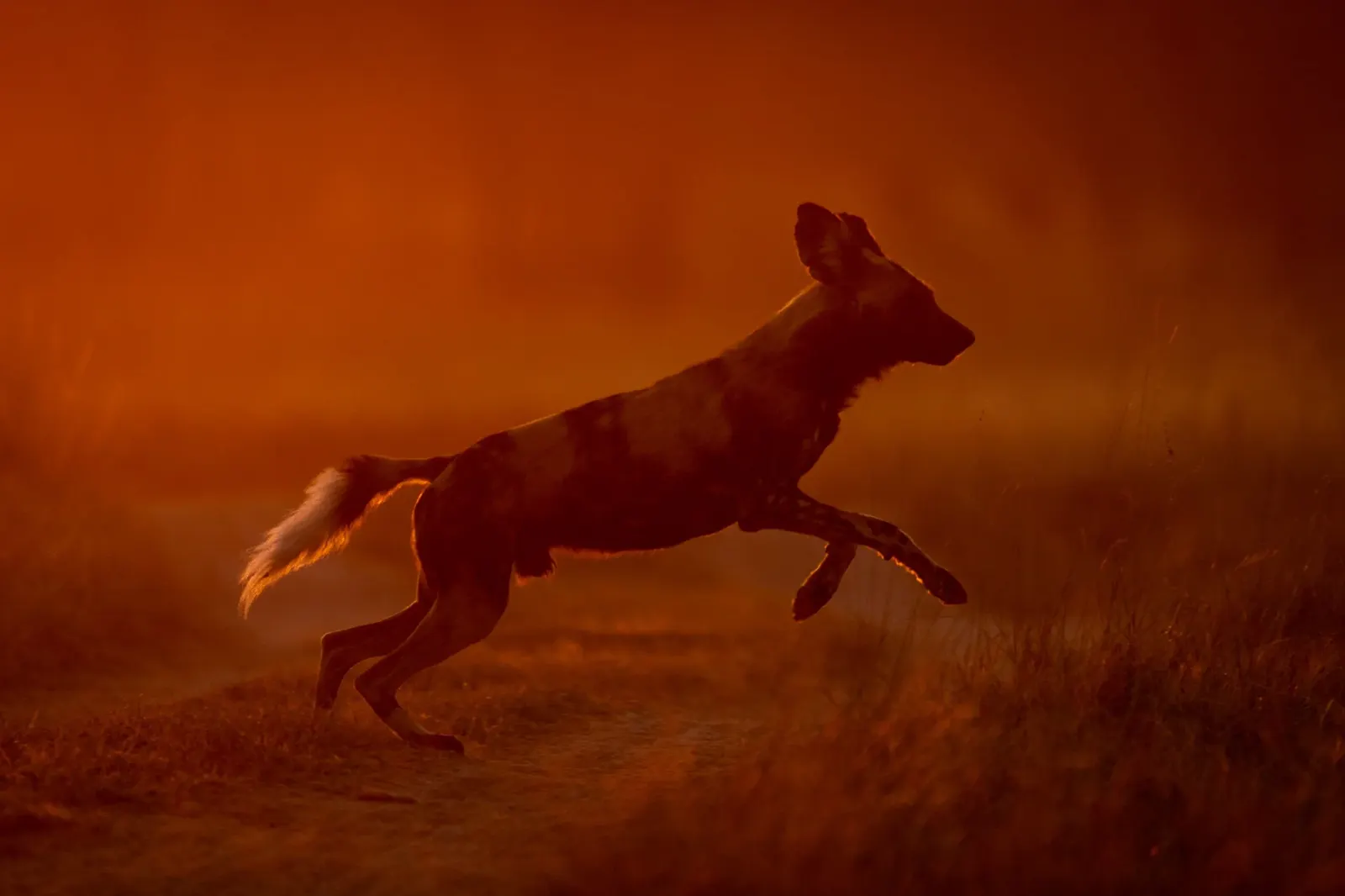
African Wild Dog
Africa's Most Efficient Predator
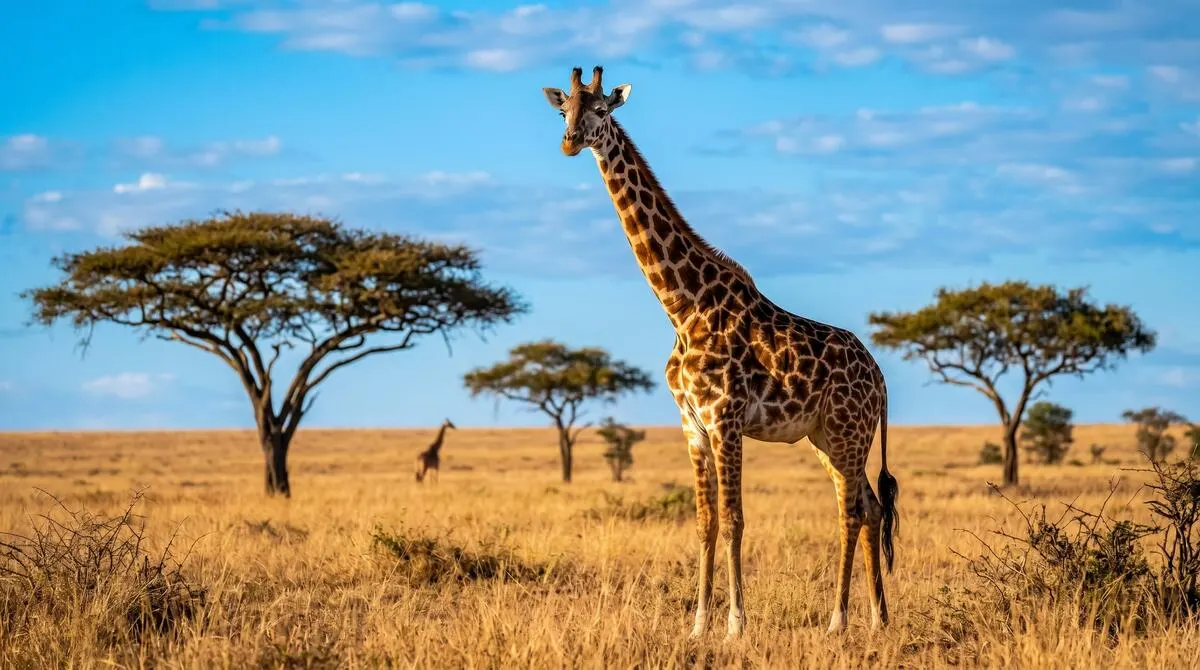
South African Giraffe
The Tallest Animal on Earth