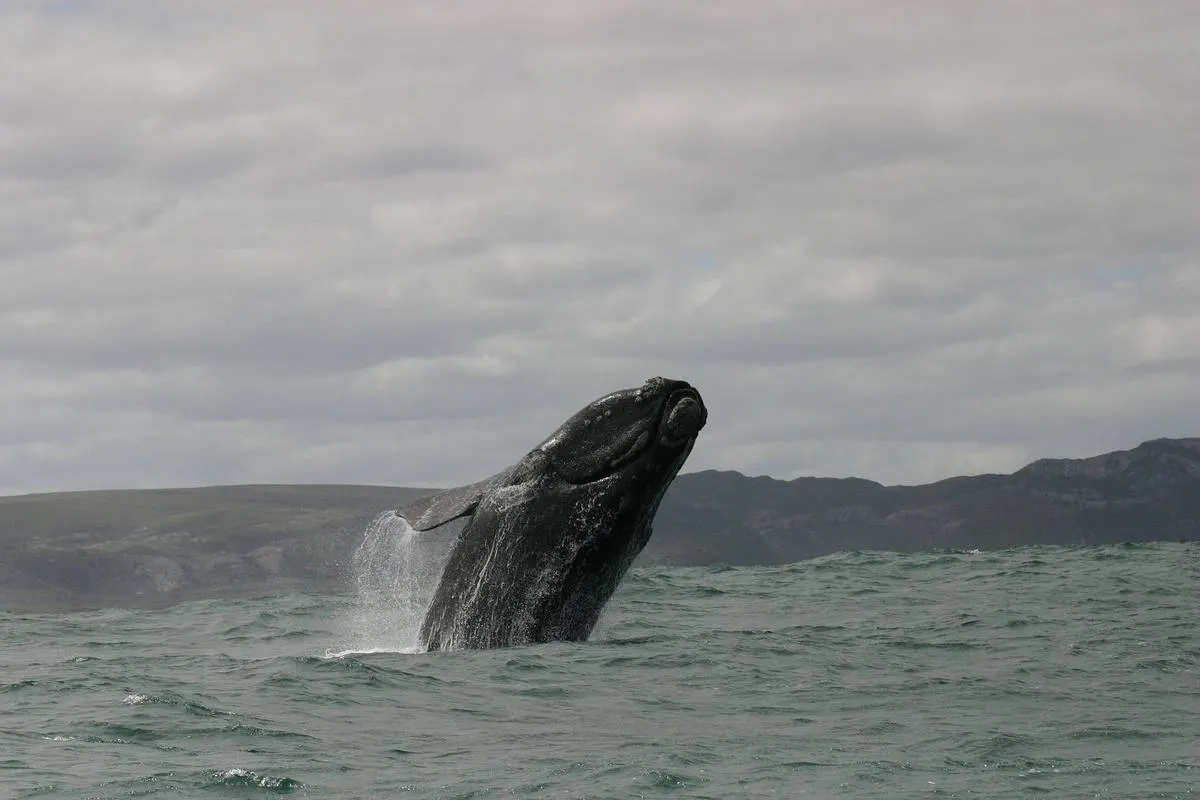
Eubalaena australis
Gentle Giants of the Cape Coast
Habitat
Coastal waters (breeding), sub-Antarctic oceans (feeding)
Diet
Filter feeder
Lifespan
70–100+ years
Weight
40,000–80,000 kg
Southern Right Whales migrate from Antarctic feeding grounds to the warm, sheltered bays of South Africa's coast each winter to mate and calve. Named by whalers as the "right" whale to hunt (they float when killed), these magnificent animals can reach 18 metres in length and weigh up to 80 tonnes.
Hermanus, on the Western Cape coast, is considered one of the best land-based whale watching destinations in the world. The town even has a "whale crier" who walks the streets blowing a kelp horn to announce whale sightings. Season runs from June to November, with peak activity in September–October.
Habitat
Coastal waters (breeding), sub-Antarctic oceans (feeding)
Diet
Filter feeder — copepods and krill
Lifespan
70–100+ years
Weight
40,000–80,000 kg
Southern right whales are generally solitary or travel in pairs, though they form temporary groups during mating season. Males engage in "competitive groups" where 2–7 males compete for access to a single female. Mothers are exceptionally attentive, keeping calves close for the first year of life. Their surface behaviours — breaching, lobtailing, and sailing — are among the most spectacular displays in the marine world.
Population
Approximately 15,000 globally, with South African waters hosting 1,500+ individuals during whale season
Hermanus
Walker Bay
Algoa Bay
Plettenberg Bay
June to November, with peak activity September–October. Hermanus is the world's best land-based whale watching destination. The town's annual Whale Festival (usually late September) celebrates the season.
Each whale has unique callosities (rough skin patches) used for identification, like fingerprints
Mothers produce 200 litres of milk per day to feed their calves
They have no dorsal fin and can be identified by their V-shaped blow
Calves grow 3 cm per day during their first year of life
Cliff-top vantage points along the Hermanus Cliff Walk offer elevated perspectives for whale photography
Use a telephoto lens (200–400mm) from shore; wide-angle (24–70mm) from boats for close encounters
Breaching shots require patience and anticipation — watch for the whale rising before triggering burst mode
Mother-and-calf pairs close to shore provide intimate, emotive compositions
Golden hour light on the ocean surface with whale spouts creates atmospheric images
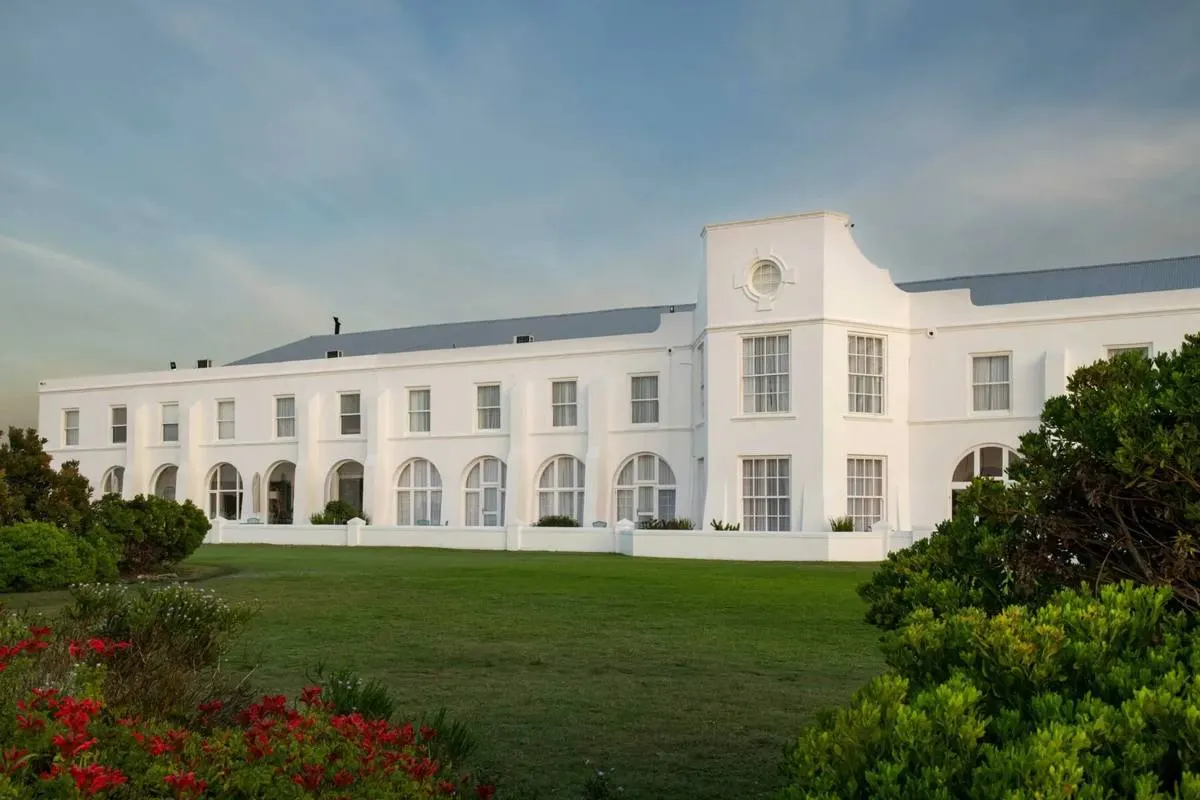
Hermanus's iconic cliff-top luxury hotel with whale watching directly from your suite balcony during season.
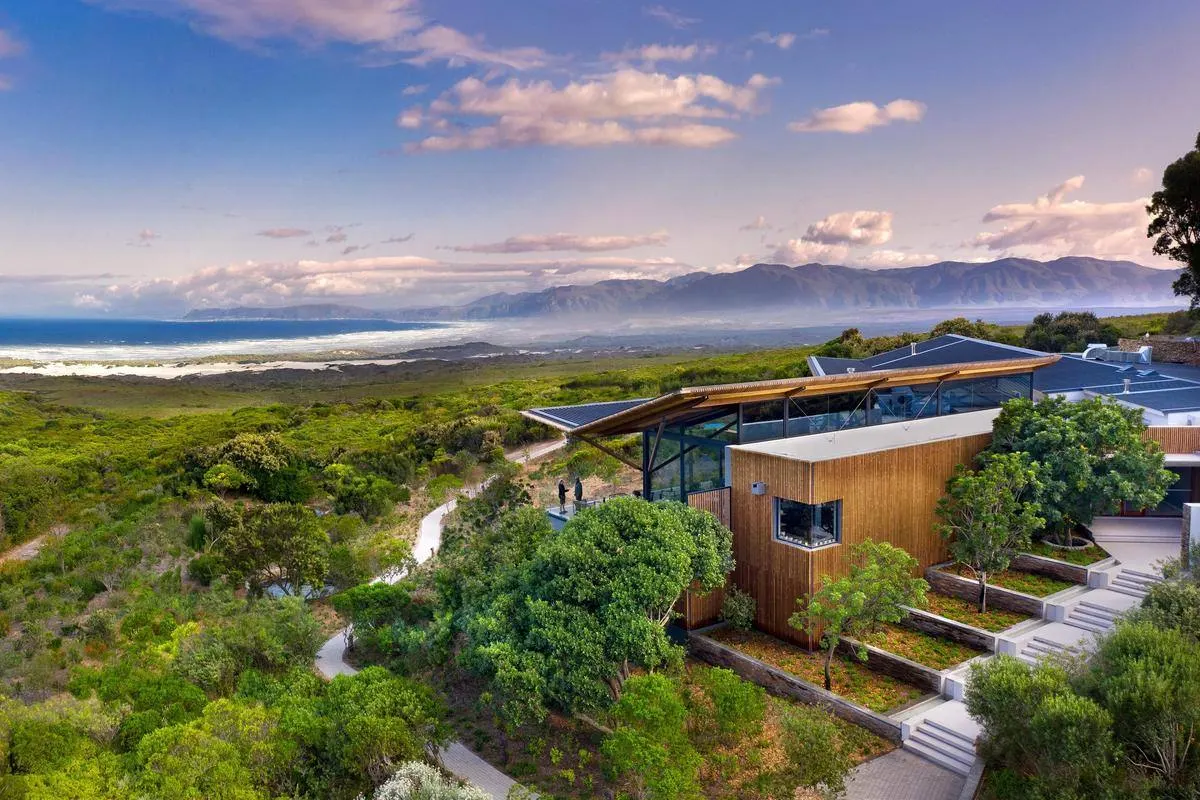
Eco-luxury lodge between Hermanus and Gansbaai combining whale watching with fynbos experiences and the Marine Big Five.
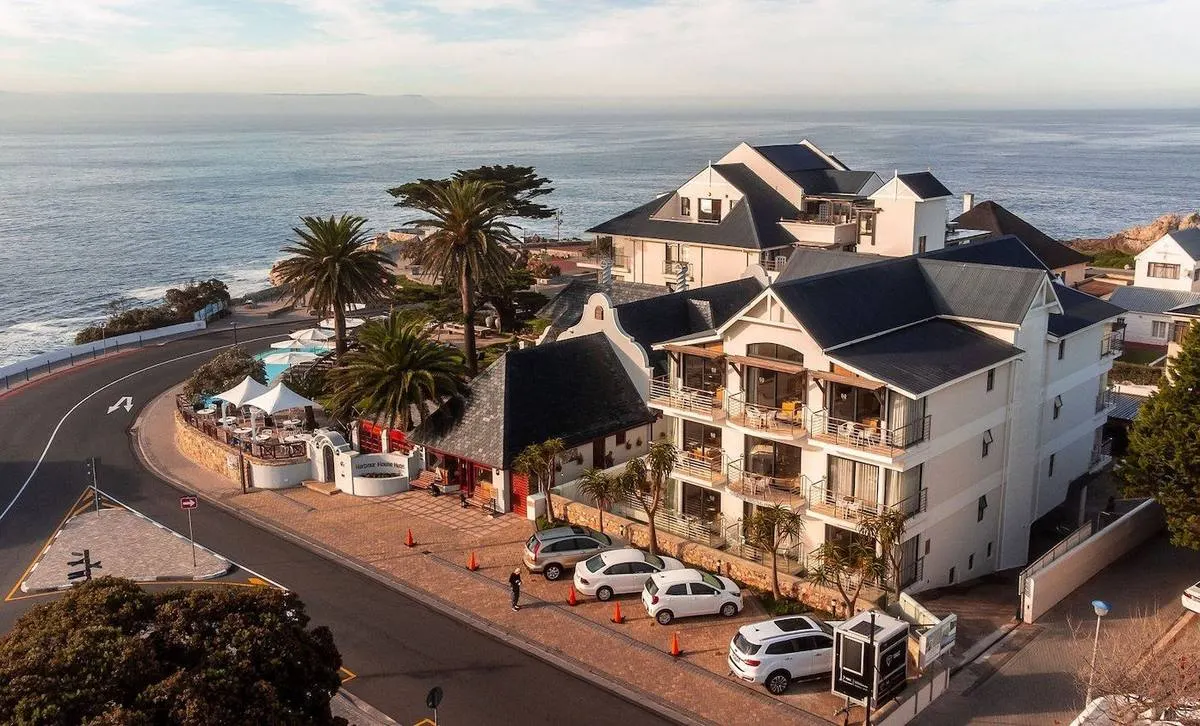
Boutique waterfront hotel in Hermanus with panoramic Walker Bay views and whales often visible from the restaurant terrace.
Climate change affecting Antarctic krill populations (their primary food source)
Ship strikes along migration routes
Entanglement in fishing gear
Noise pollution from shipping and offshore energy development disrupting communication
Southern right whales are a conservation success story in South African waters, having recovered from near-extinction by commercial whaling. They have been protected in South Africa since 1935. The Whale Unit at the University of Pretoria conducts annual aerial surveys to monitor population trends. The Dyer Island Conservation Trust and Marine Dynamics research whale behaviour off Gansbaai.
The best time for whale watching in South Africa is June to November, with peak activity in September and October. Southern right whales migrate from Antarctic feeding grounds to the warm, sheltered bays of the Western Cape to mate and calve. Hermanus, Walker Bay, and False Bay offer the most reliable sightings, often visible from shore without needing a boat.
Multi-day, all-inclusive safari packages that include the best southern right whale viewing destinations.
Our expert safari consultants will craft your perfect southern right whale encounter — from choosing the ideal reserve to selecting the best season and lodge.
Big Five game drives, walking safaris & more
Luxury accommodation in prime wildlife areas
Kruger, Sabi Sands, Masai Mara & beyond
Plan your trip around peak wildlife seasons
Honest pricing guide for every budget
How your safari protects African wildlife
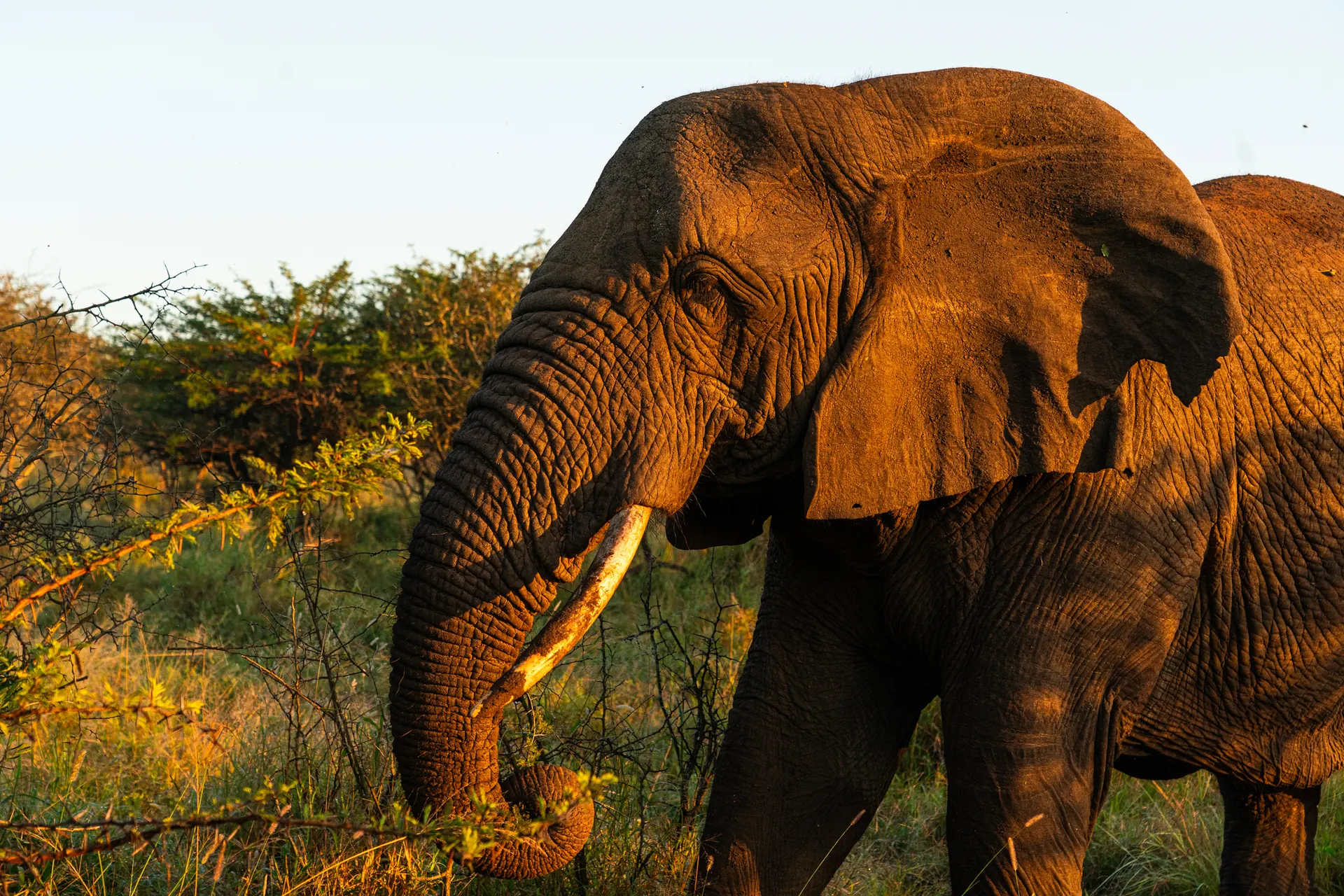
African Elephant
The Gentle Giants of the African Bush
African Lion
The King of the African Savanna
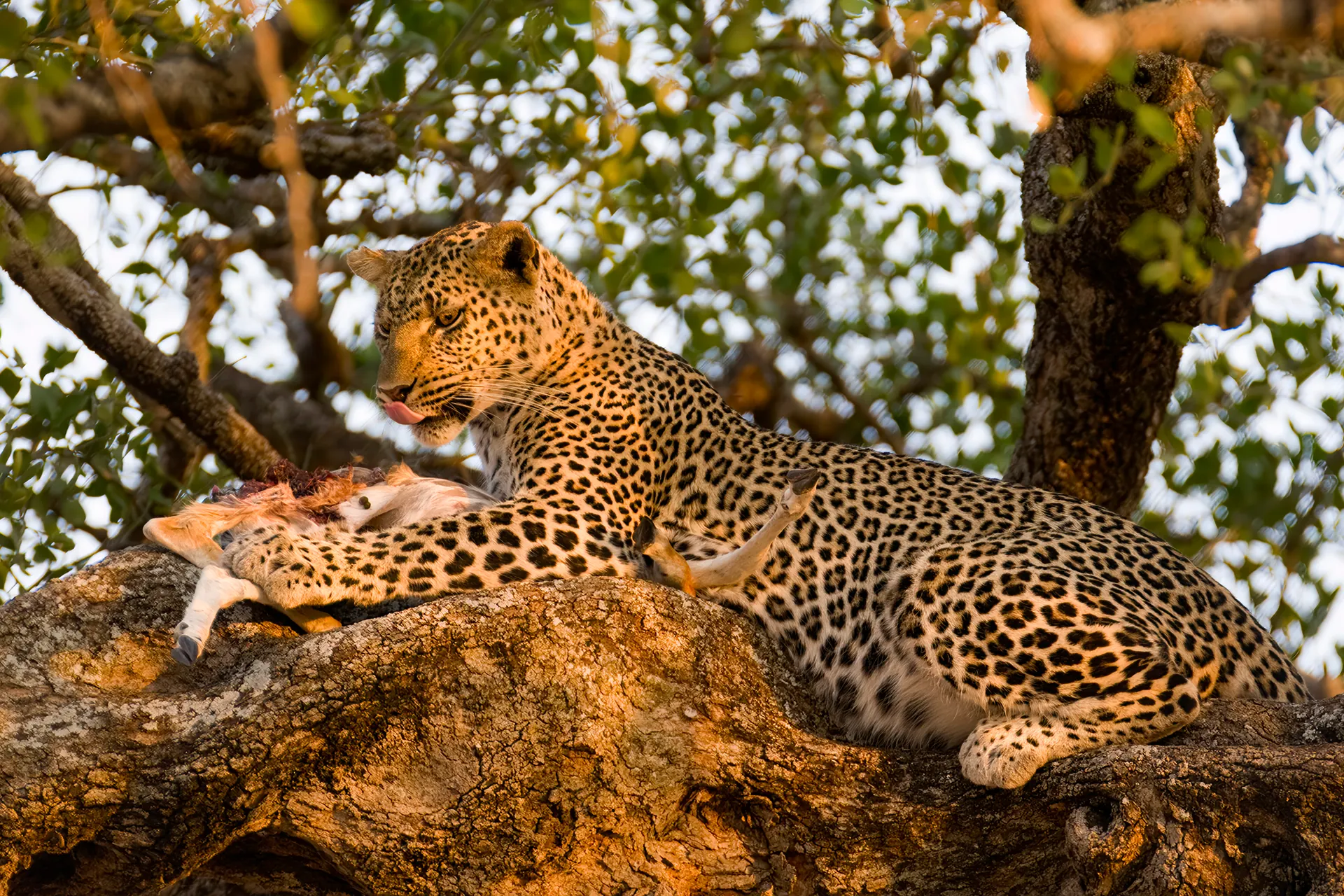
African Leopard
The Elusive Ghost of the Bush
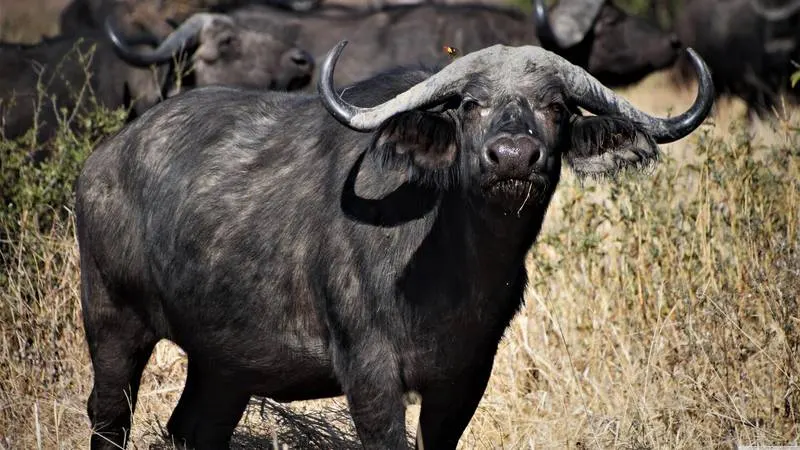
Cape Buffalo
Africa's Most Dangerous Bovine
White Rhinoceros
Guardians of the Grassland
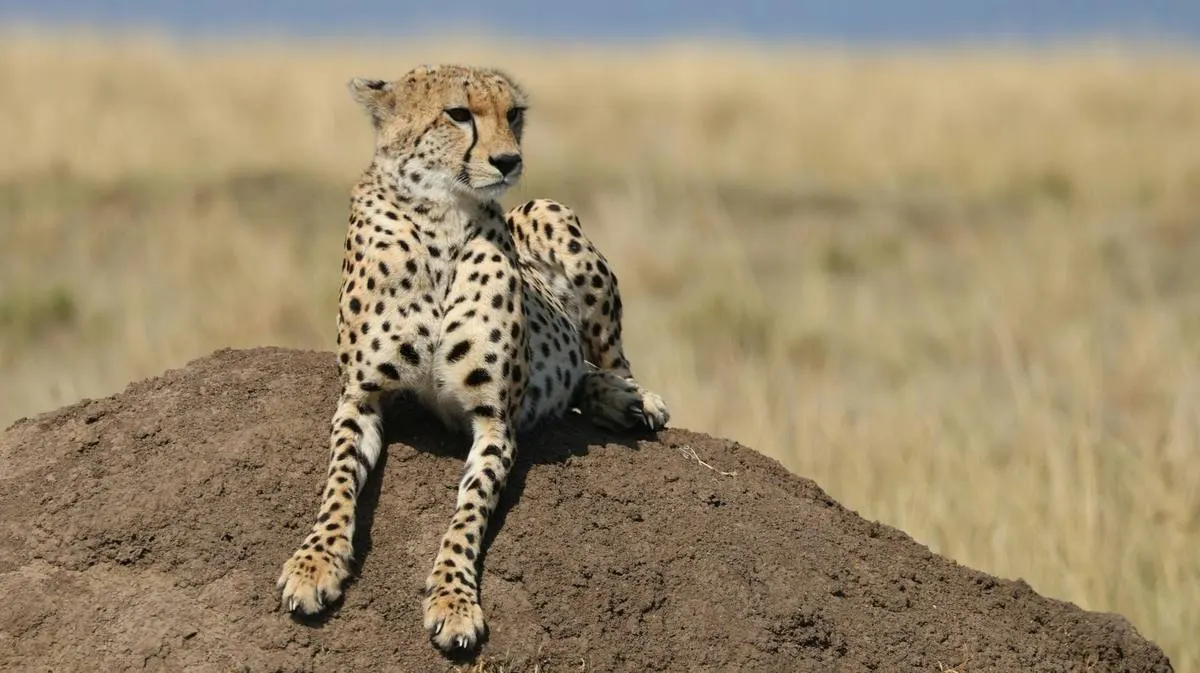
Cheetah
The Fastest Animal on Land
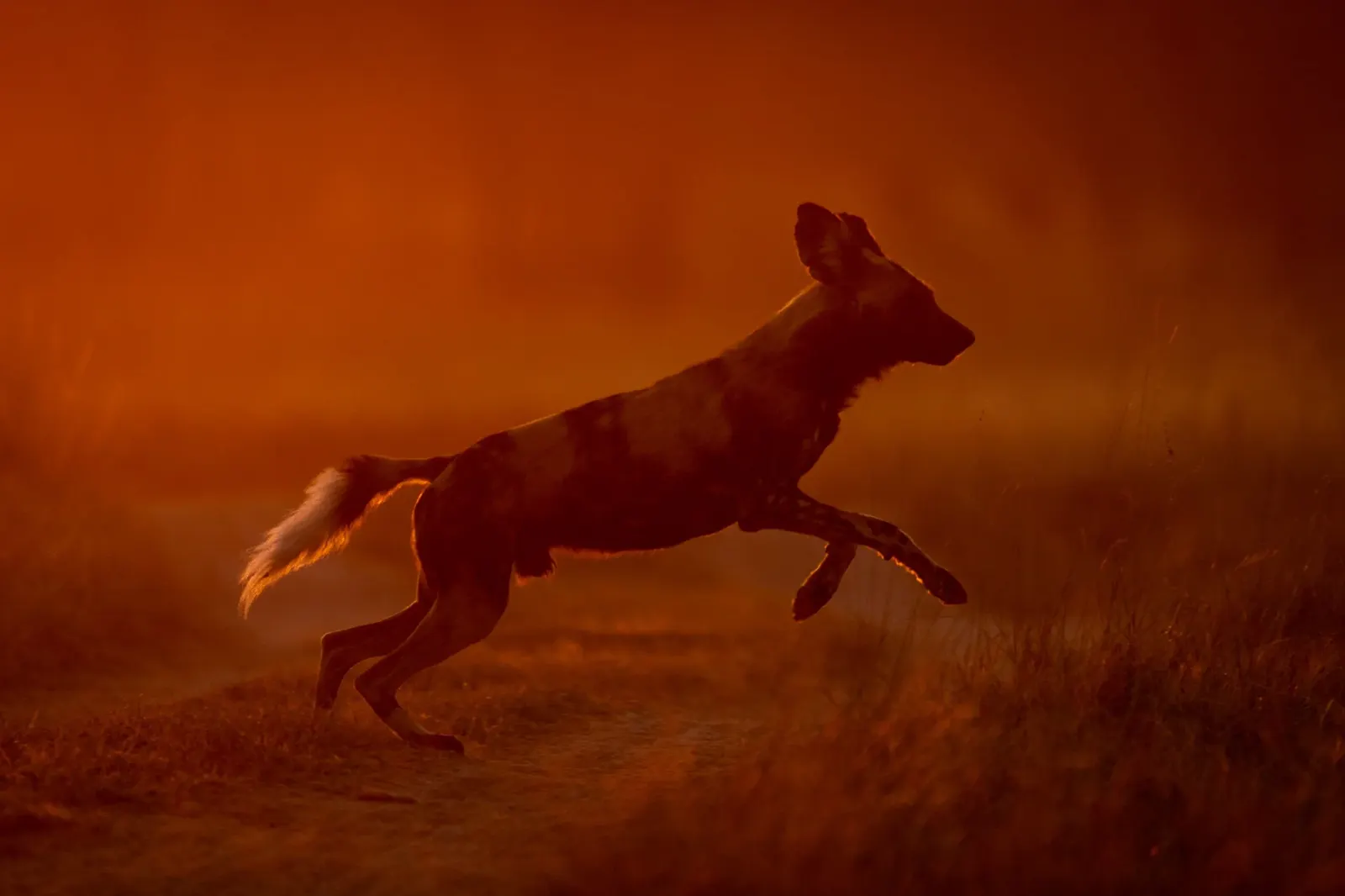
African Wild Dog
Africa's Most Efficient Predator
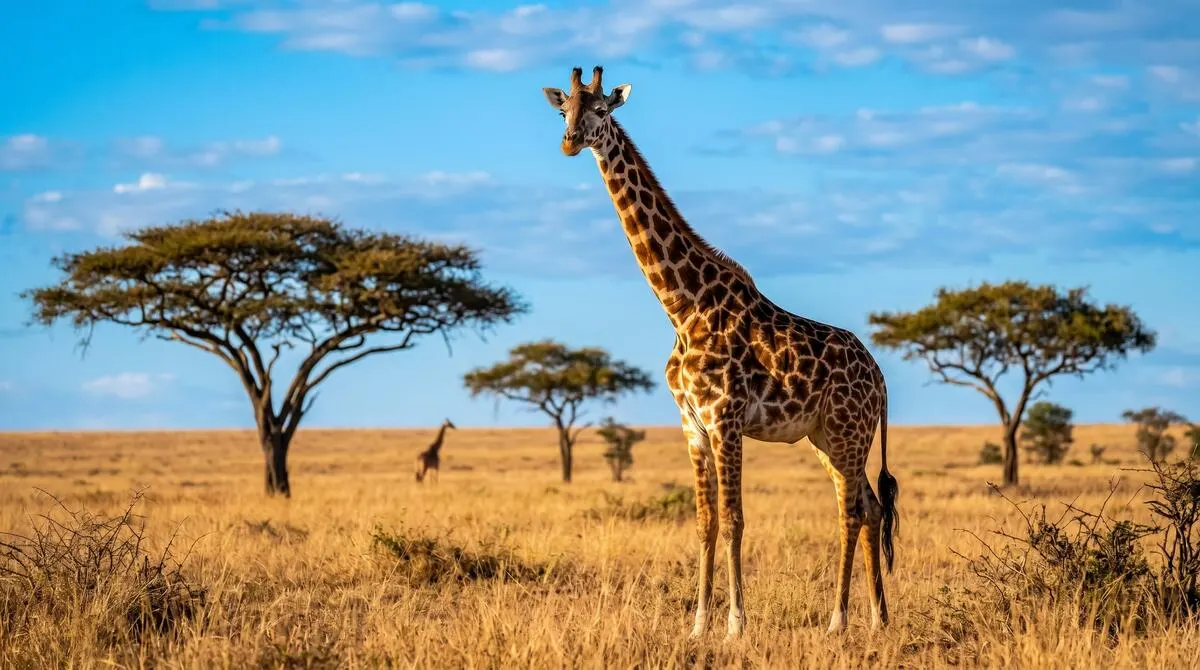
South African Giraffe
The Tallest Animal on Earth