Blue Wildebeest
Connochaetes taurinus
The Great Migration's Unstoppable Engine
Habitat
Short-grass plains, open savanna, and light woodland across eastern and southern Africa
Diet
Herbivore
Lifespan
20–22 years (wild)
Weight
140–290 kg
About the Blue Wildebeest
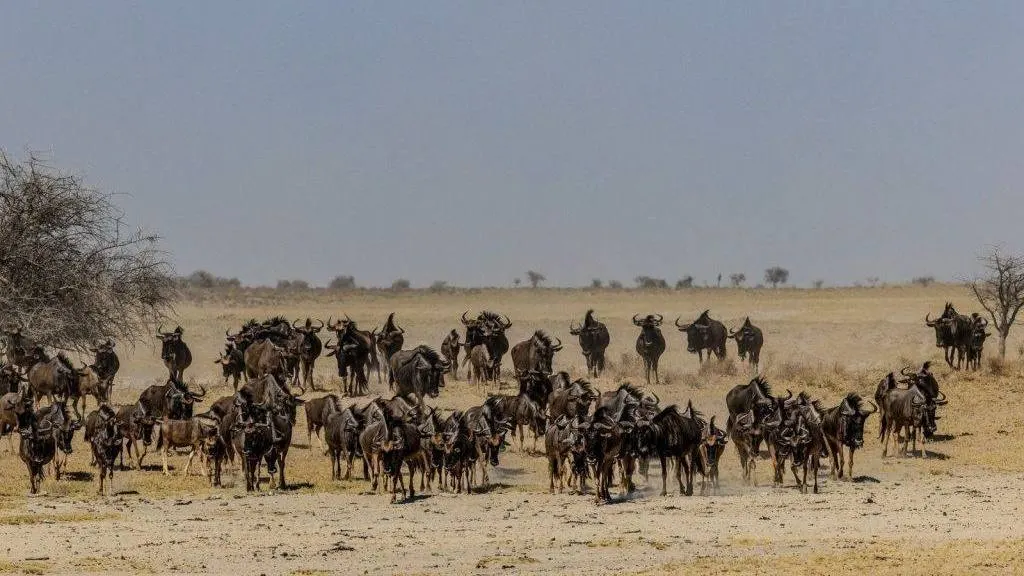
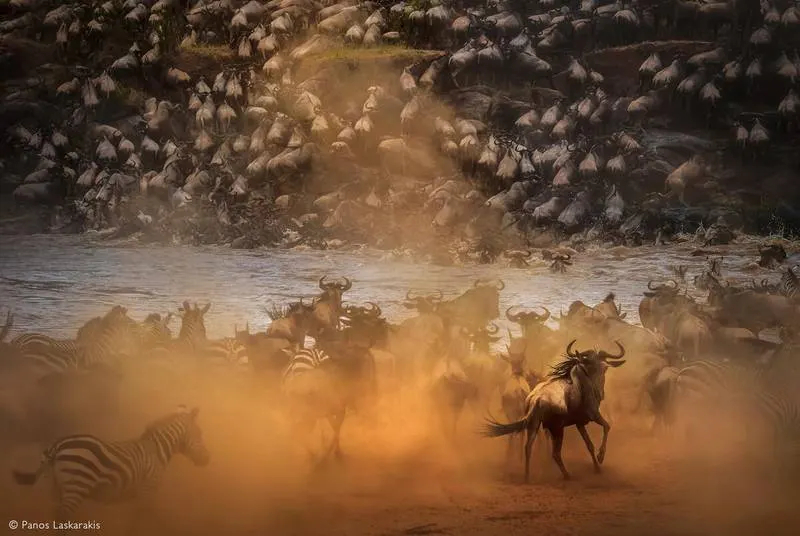
The blue wildebeest — also known as the brindled gnu — is the driving force behind the Great Migration, the largest movement of terrestrial mammals on Earth. Every year, approximately 1.5 million wildebeest traverse a 3,000 km circuit between Tanzania's Serengeti and Kenya's Masai Mara in a relentless search for fresh grazing and water. The dramatic river crossings, where thousands plunge into crocodile-infested waters, rank among the most spectacular wildlife events on the planet.
Despite their somewhat ungainly appearance, wildebeest are remarkably resilient. Calves can run with the herd within minutes of birth — an essential adaptation when predators are never far away. Around 500,000 calves are born during a three-week window in February, flooding the Serengeti plains in a phenomenon known as the "calving season." In South Africa, blue wildebeest thrive in Kruger National Park, Pilanesberg, and Hluhluwe–iMfolozi, where they form smaller resident herds rather than migrating.
Habitat & Diet
Habitat
Short-grass plains, open savanna, and light woodland across eastern and southern Africa
Diet
Herbivore — short, green grasses (highly selective grazer)
Lifespan
20–22 years (wild)
Weight
140–290 kg
Social Behaviour
Wildebeest are highly gregarious, forming enormous herds during the Great Migration. Males are territorial during the rut (May–June), establishing small territories of 50–200 metres that they defend vigorously with horn displays and fighting. Outside the breeding season, males join bachelor herds. The calving season sees synchronized births over a 2–3 week period — an evolutionary strategy to overwhelm predators with sheer numbers.
Population
Approximately 1.5 million in the Serengeti–Mara ecosystem alone; total global population estimated at 1.5–2 million
Where to See Blue Wildebeest on Safari
Serengeti National Park
Masai Mara
Kruger National Park
Ngorongoro Crater
Pilanesberg
Best Time to Visit
For the Great Migration: July–October for river crossings in the Masai Mara; January–March for calving season in the southern Serengeti. In South Africa, wildebeest can be seen year-round in Kruger and Pilanesberg.
Fascinating Facts About Blue Wildebeest
Around 500,000 wildebeest calves are born in a synchronised 3-week calving season each February
They can sense rainfall from up to 50 km away and will alter their migration route accordingly
An estimated 250,000 wildebeest perish during the Great Migration each year from predation, drowning, and exhaustion
Wildebeest are responsible for maintaining the short-grass plains of the Serengeti through intensive grazing
Their name comes from the Afrikaans/Dutch words for "wild beast"
Photography Tips: Capturing the Blue Wildebeest
River crossing shots are the ultimate wildebeest photography — use fast shutter speeds (1/2000s+) and continuous burst mode
Dust clouds kicked up by moving herds create atmospheric environmental shots in golden light
Capture the drama of predator-prey interactions — crocodiles at river crossings and lions stalking herds
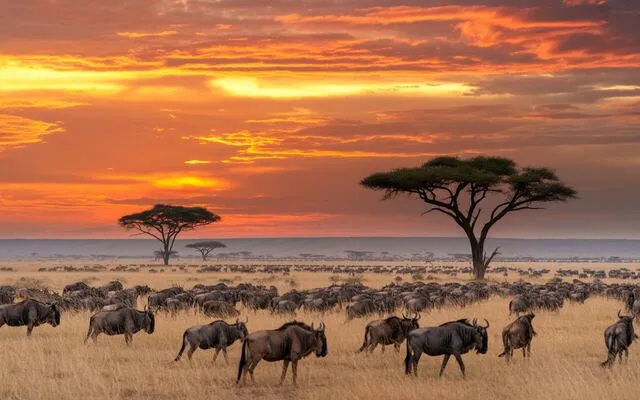
Silhouette shots of wildebeest herds against African sunsets are iconic and widely published
Calving season in the Serengeti offers tender mother-and-newborn shots alongside dramatic predator action
Where to Stay to See Blue Wildebeest
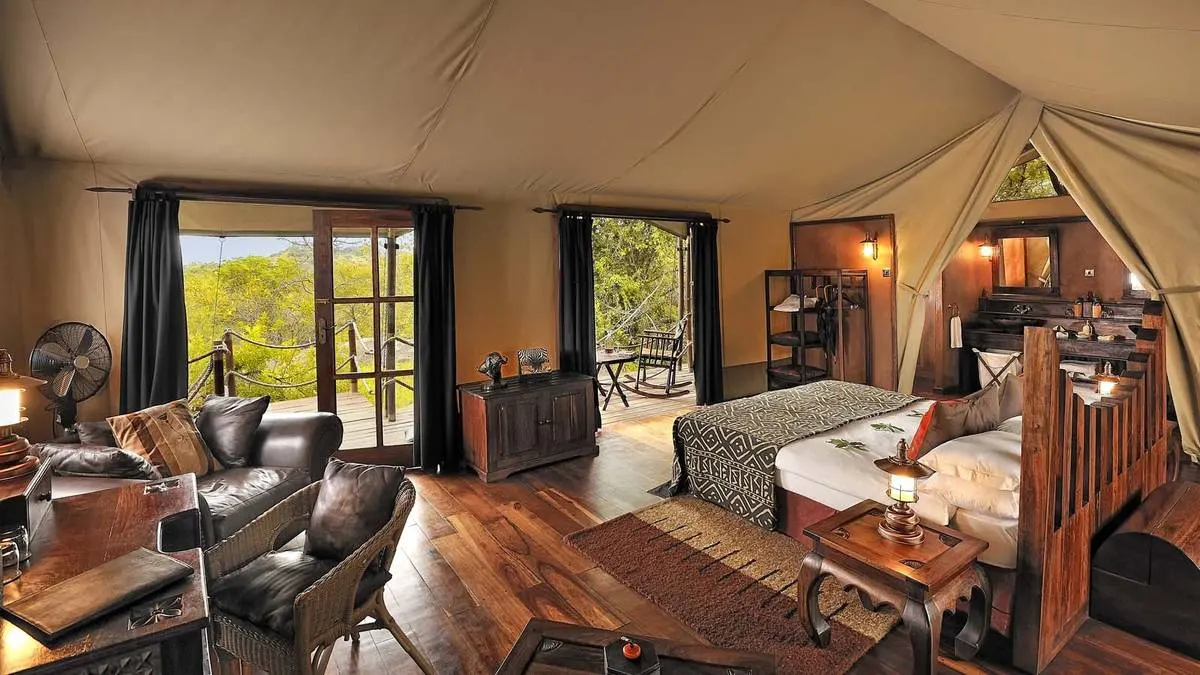
Serengeti Migration Camp
Mobile luxury camp that follows the Great Migration through the Serengeti, ensuring you're always where the action is.
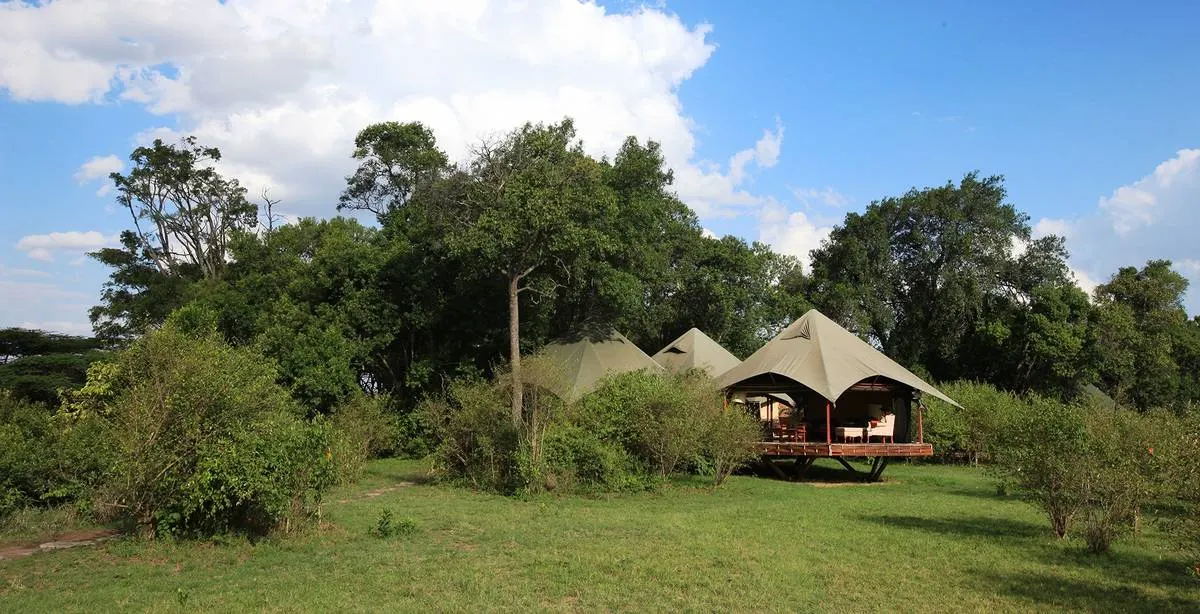
Mara Plains Camp
Ultra-luxury tented camp in the heart of the Masai Mara, perfectly positioned for the Great Migration river crossings.
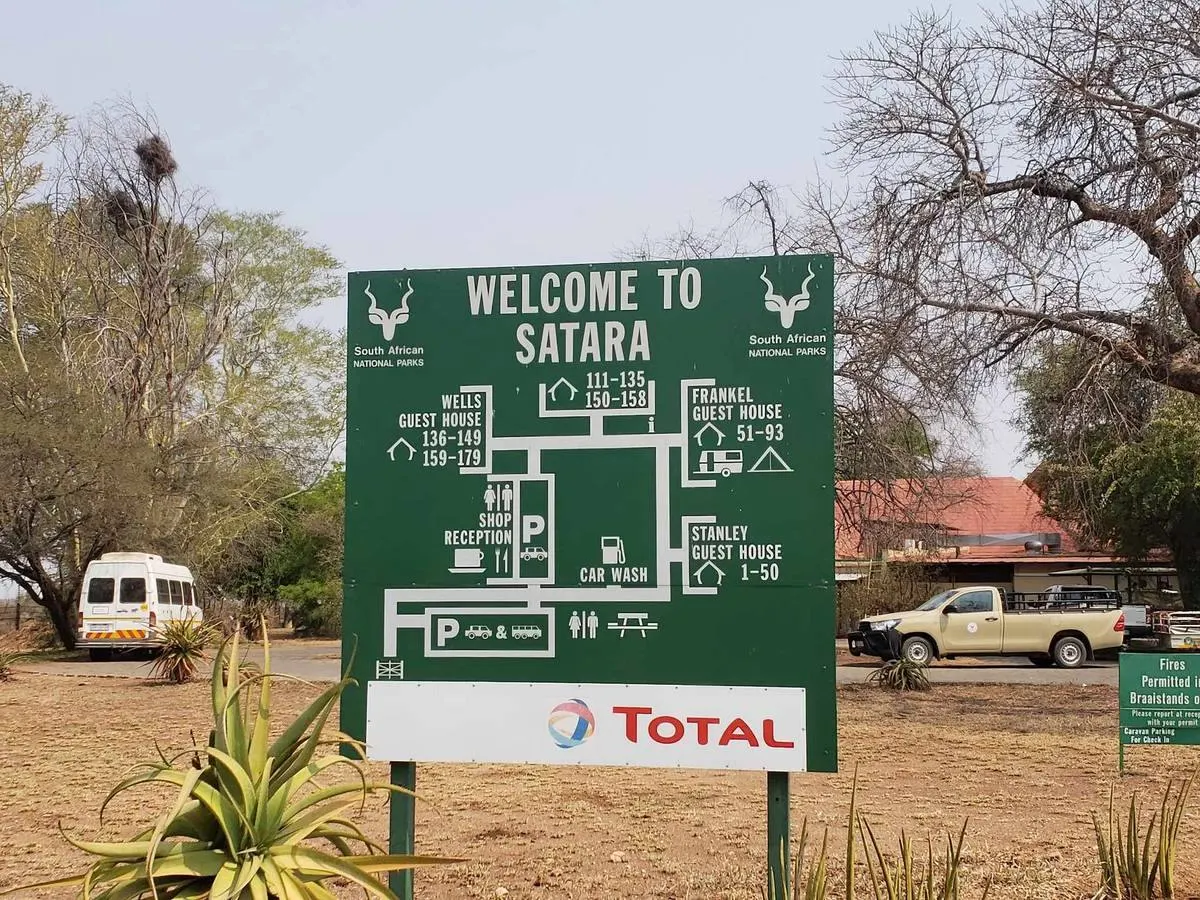
Kruger — Satara Rest Camp
Central Kruger's grasslands host resident blue wildebeest herds alongside zebra and predators year-round.
Blue Wildebeest Conservation
Threats
Habitat encroachment from expanding settlements and agriculture along migration routes
Fencing that blocks traditional migration corridors
Climate change altering rainfall patterns and grazing availability
Poaching for bushmeat, particularly with wire snares
Conservation Efforts
The Serengeti–Mara ecosystem is protected by a network of national parks and conservancies in both Tanzania and Kenya. Community-based conservancies around the Masai Mara provide income to local Maasai communities in exchange for maintaining open wildlife corridors. In South Africa, wildebeest populations are well-managed within national parks and private reserves.
Frequently Asked Questions About Blue Wildebeest
The Great Migration is the largest terrestrial mammal migration on Earth, involving approximately 1.5 million blue wildebeest alongside 200,000 zebras and 500,000 gazelles moving in a continuous clockwise circuit between Tanzania's Serengeti and Kenya's Masai Mara. Driven by rainfall and fresh grazing, the herds cover around 3,000 km annually. The dramatic river crossings — where thousands plunge into crocodile-infested rivers — are among nature's most spectacular events.
Safari Packages to See Blue Wildebeest
Multi-day, all-inclusive safari packages that include the best blue wildebeest viewing destinations.
East Africa Migration, Safari & Highlands — Kenya & Tanzania Combined
Nairobi, Masai Mara
From $9,490
Serengeti Great Migration & Ngorongoro Crater — Tanzania's Greatest Show
Arusha, Serengeti National Park
From $5,990
Great Migration & Gorilla Trek — Tanzania & Rwanda Ultimate Combo
Arusha, Tarangire
From $11,990
Serengeti & Zanzibar Romance — Migration, Balloon & Beach Bliss
Serengeti, Ngorongoro Crater
From $7,997
Ready to See Blue Wildebeest in the Wild?
Our expert safari consultants will craft your perfect blue wildebeest encounter — from choosing the ideal reserve to selecting the best season and lodge.
Plan Your Blue Wildebeest Safari
Safari Experiences
Big Five game drives, walking safaris & more
Safari Lodges
Luxury accommodation in prime wildlife areas
Destinations
Kruger, Sabi Sands, Masai Mara & beyond
Best Time to Visit
Plan your trip around peak wildlife seasons
Safari Costs
Honest pricing guide for every budget
Conservation
How your safari protects African wildlife
Explore More African Wildlife
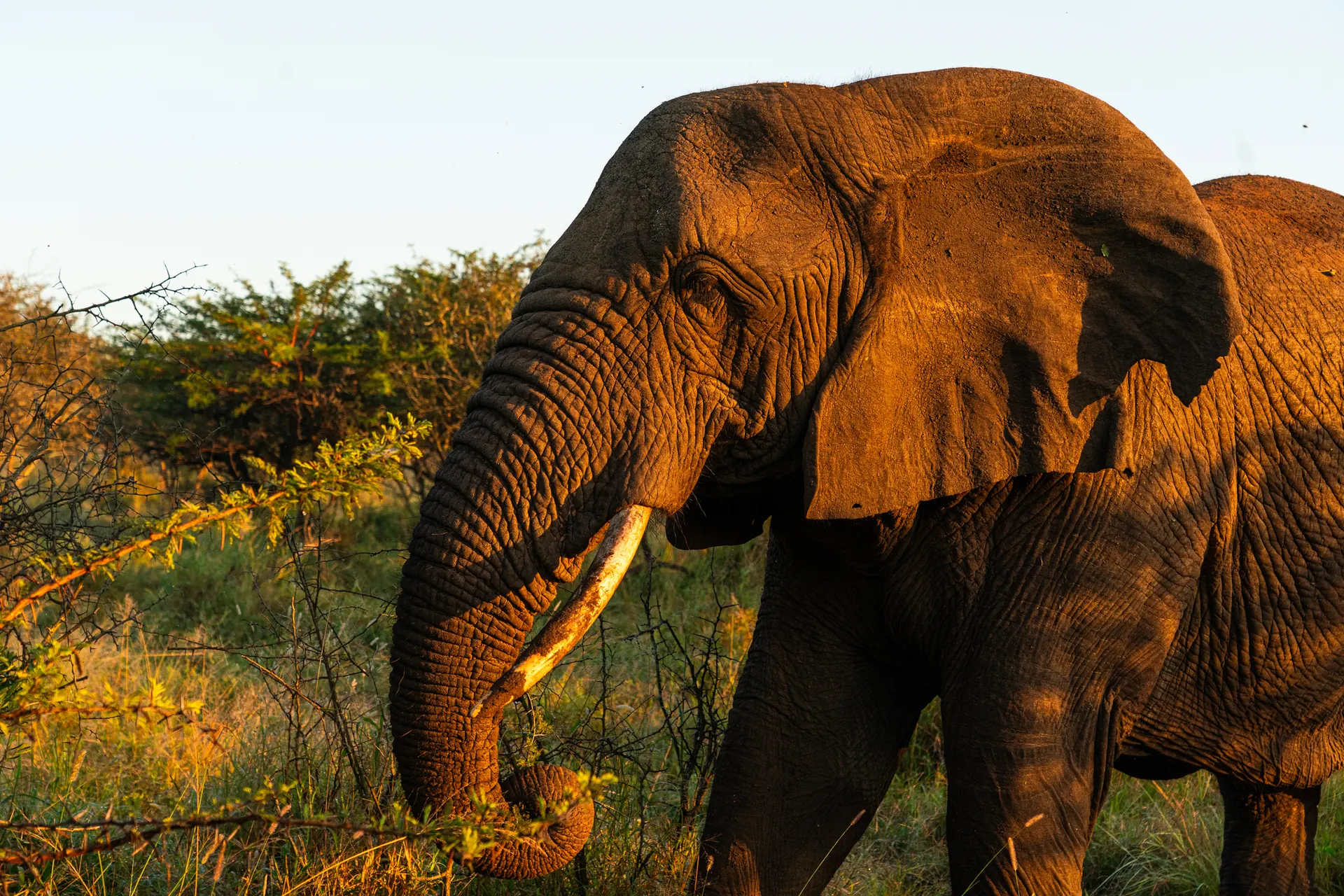
African Elephant
The Gentle Giants of the African Bush
African Lion
The King of the African Savanna
African Leopard
The Elusive Ghost of the Bush
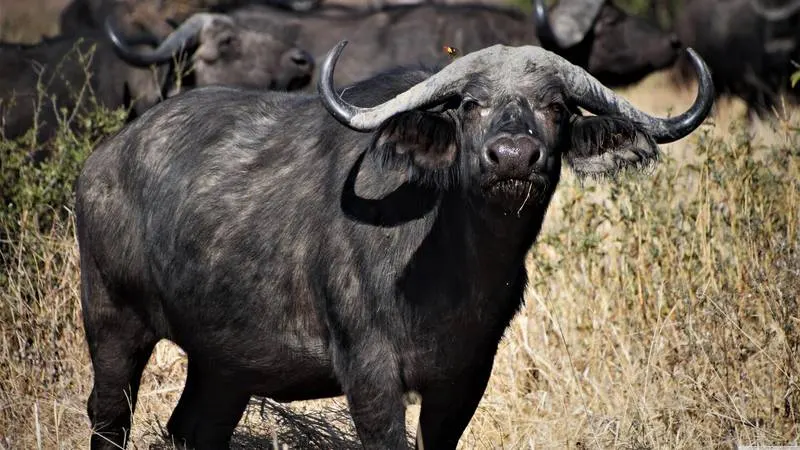
Cape Buffalo
Africa's Most Dangerous Bovine
White Rhinoceros
Guardians of the Grassland
Cheetah
The Fastest Animal on Land
African Wild Dog
Africa's Most Efficient Predator
South African Giraffe
The Tallest Animal on Earth