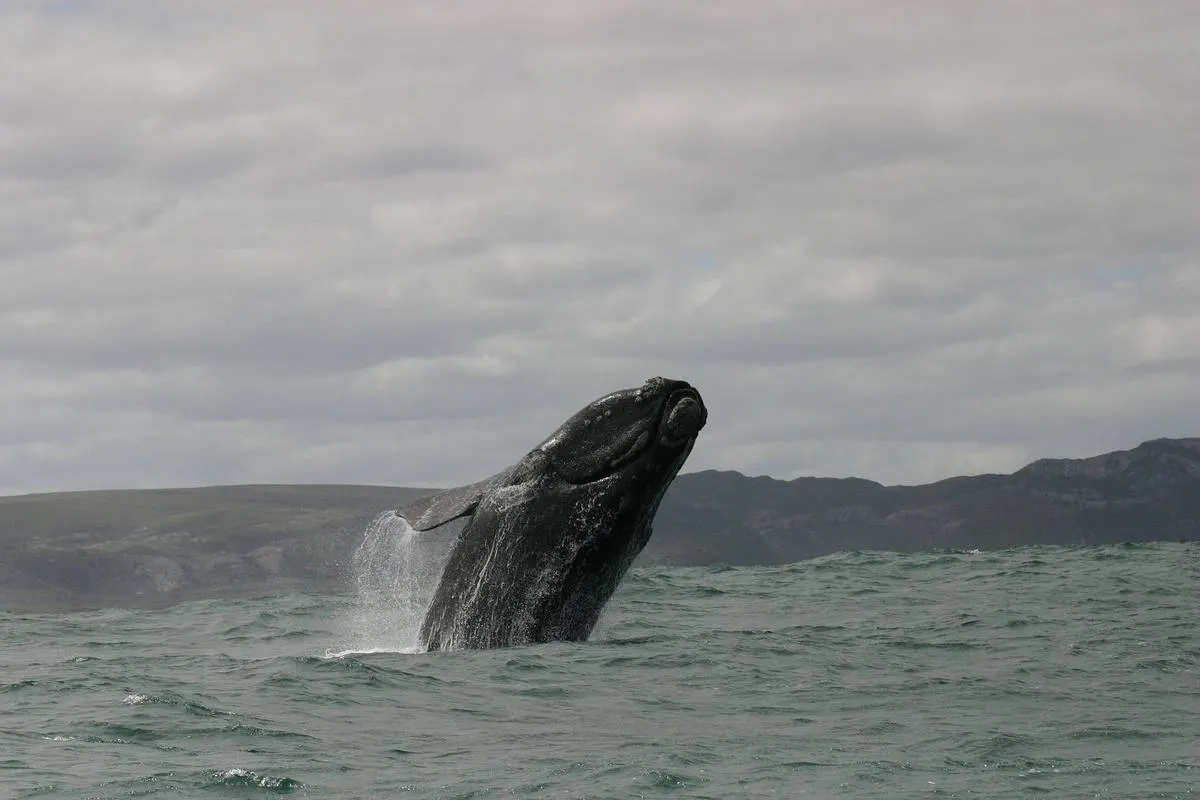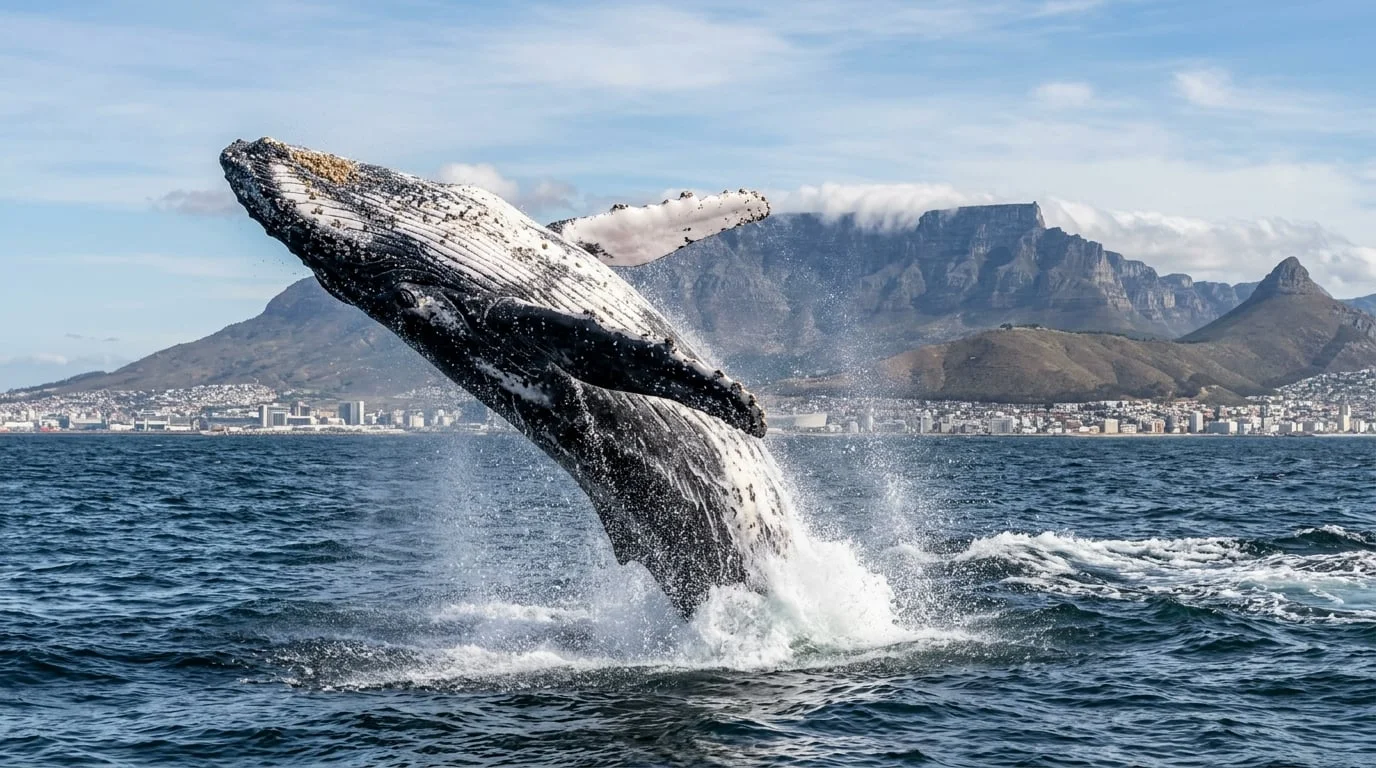
Megaptera novaeangliae
The Acrobats of the Ocean — Cape Town's Seasonal Spectacle
Habitat
Coastal and open oceans worldwide
Diet
Krill, small fish (anchovies, sardines, herring)
Lifespan
80–90 years
Weight
25,000–36,000 kg
Humpback whales are among the most iconic marine mammals on Earth, renowned for their spectacular acrobatic breaching, haunting songs, and epic migrations spanning 8,000 km each way. Growing up to 16 metres long and weighing 36 tonnes, these gentle giants travel from Antarctic feeding grounds to the warm waters off South Africa's coast each winter to breed and calve.
Cape Town and the Western Cape offer extraordinary humpback whale watching from June to November. False Bay, Table Bay, and the waters off Hermanus regularly host these magnificent creatures, often seen breaching clear of the water in displays of power and joy. Unlike the more sedentary southern right whale, humpbacks are energetic travellers — mothers teach their calves to breach almost from birth. Their complex songs, which can last up to 30 minutes and travel thousands of kilometres through the ocean, remain one of nature's great mysteries.
Habitat
Coastal and open oceans worldwide — breeding in warm tropical and subtropical waters, feeding in cold polar regions
Diet
Krill, small fish (anchovies, sardines, herring) — uses bubble-net feeding technique
Lifespan
80–90 years
Weight
25,000–36,000 kg
Humpback whales are generally solitary or travel in small, fluid groups of 2–3 individuals, though they form larger temporary aggregations on feeding and breeding grounds. Males are famous for their complex songs — sequences of moans, cries, and howls that can last 30 minutes and evolve over time. All males in a population sing the same song, which changes gradually each season. Mothers are fiercely protective of calves and have been observed shielding them from orca attacks.
Population
Approximately 80,000 globally — one of the great conservation success stories, recovering from near-extinction (only 1,000–2,000 individuals in the 1960s)
False Bay, Cape Town
Hermanus
Plettenberg Bay
Durban Coast
Tofo, Mozambique
June to November along the South African coast. Peak whale watching in Cape Town is August–October when humpbacks pass through False Bay and Table Bay on their northward migration. The Durban coast sees them slightly earlier (June–July). In Mozambique, whale season peaks July–October.
Humpback whales sing complex songs that can last up to 30 minutes and be heard 30 km away — only males sing
They use "bubble-net feeding" — blowing bubbles in a spiral to trap fish, then lunging upward through the concentrated prey
A humpback's pectoral fins are the longest of any whale species, reaching up to 5 metres (one-third of body length)
Each whale's tail fluke has a unique pattern of markings, like a fingerprint, used by researchers to identify individuals
Humpback calves drink up to 190 litres of milk per day and gain approximately 45 kg daily in their first year
Humpbacks breach frequently — keep your camera ready with a fast shutter speed (1/2000s or faster) to freeze the action
Shoot from elevated coastal points like Signal Hill or Chapman's Peak for dramatic Table Mountain backdrops
Tail flukes raised before a dive are iconic — each fluke pattern is unique, making every shot one-of-a-kind
Golden hour provides stunning backlit spray effects when whales blow at the surface
Underwater encounters (in Mozambique and Tonga) require a wide-angle lens and respectful distance — let the whale approach you
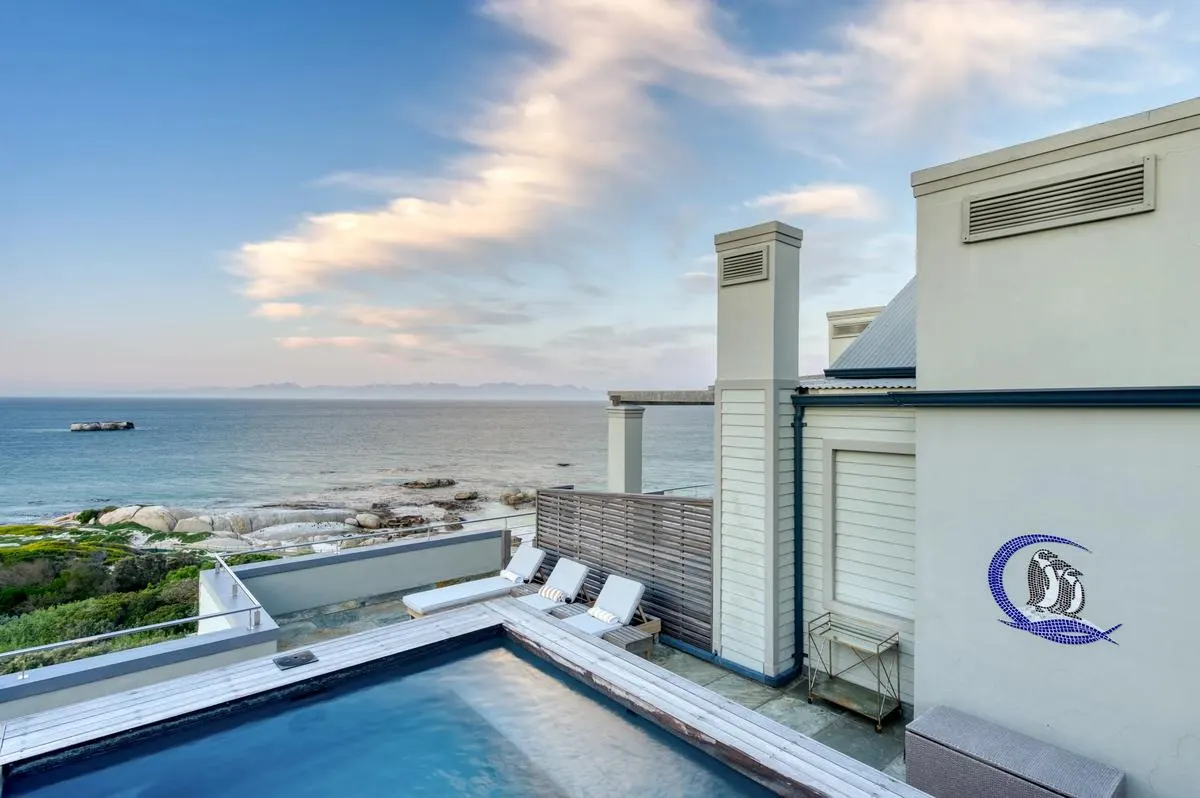
Boutique cliff-side lodge nestled under Chapman's Peak with unobstructed ocean views — humpbacks and southern rights are regularly spotted from the deck during whale season.
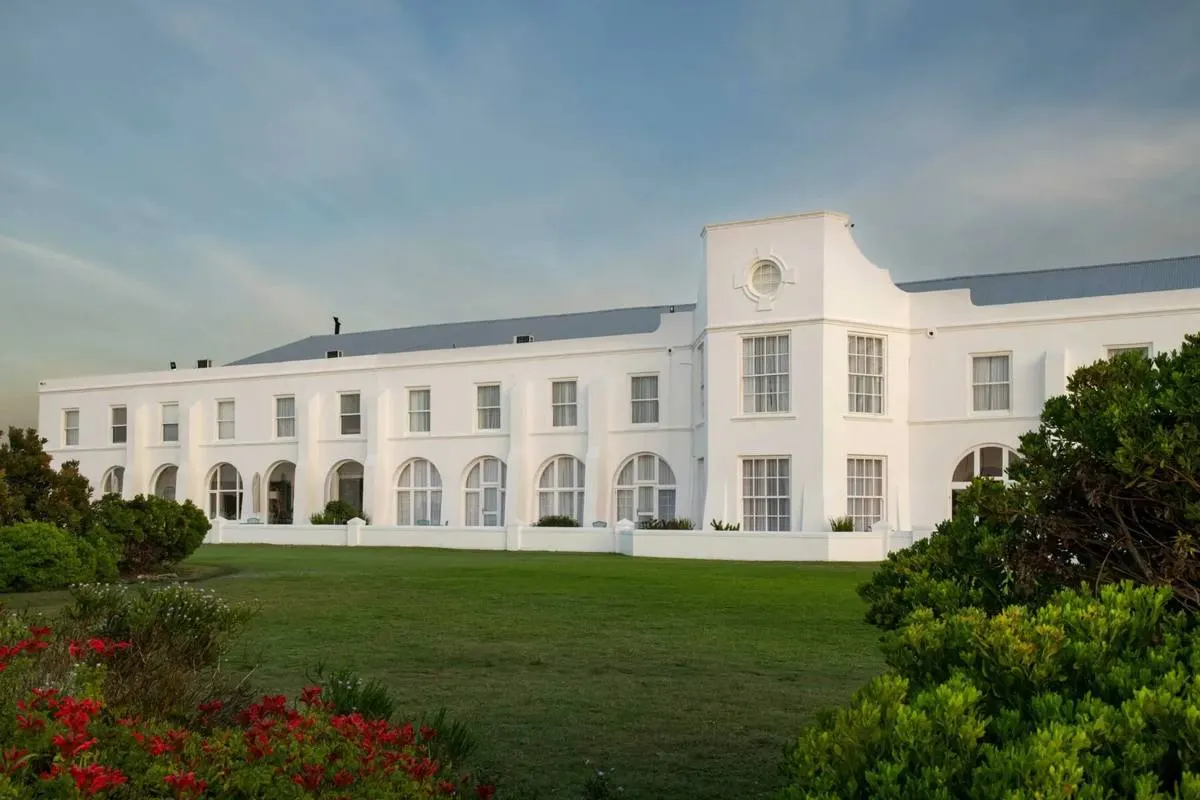
Hermanus's iconic cliff-top luxury hotel with whale watching directly from your suite balcony during season.
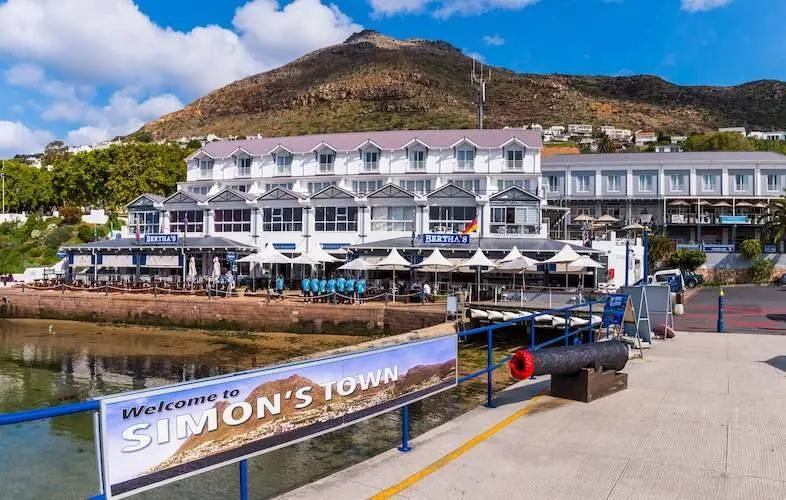
Waterfront boutique hotel in the heart of False Bay — ideal base for boat-based whale watching and penguin colony visits.
Entanglement in fishing gear (gillnets and lobster pot lines)
Ship strikes along busy coastal shipping lanes
Noise pollution from shipping, sonar, and offshore energy disrupting communication and navigation
Climate change reducing Antarctic krill stocks — their primary food source
Microplastic ingestion through filter feeding
Humpback whales are one of the greatest conservation success stories in marine biology. From a global population of just 1,000–2,000 individuals in the 1960s following commercial whaling, they have recovered to approximately 80,000 today thanks to the 1966 International Whaling Commission moratorium. In South Africa, the Marine Living Resources Act protects all cetaceans, with boat-based whale watching strictly regulated to minimise disturbance. Research organisations including the Whale Unit at the University of Pretoria and the Dyer Island Conservation Trust conduct ongoing population monitoring. Cape Town's Table Bay Nature Reserve supports marine protected areas that benefit migrating humpbacks.
Humpback whales pass through Cape Town's waters from June to November during their annual migration from Antarctic feeding grounds to warm breeding waters off Mozambique and Madagascar. Peak sightings in False Bay and Table Bay occur August–October. Unlike southern right whales that linger in sheltered bays, humpbacks are typically seen further offshore during their passage, making boat-based excursions the best way to see them.
Multi-day, all-inclusive safari packages that include the best humpback whale viewing destinations.
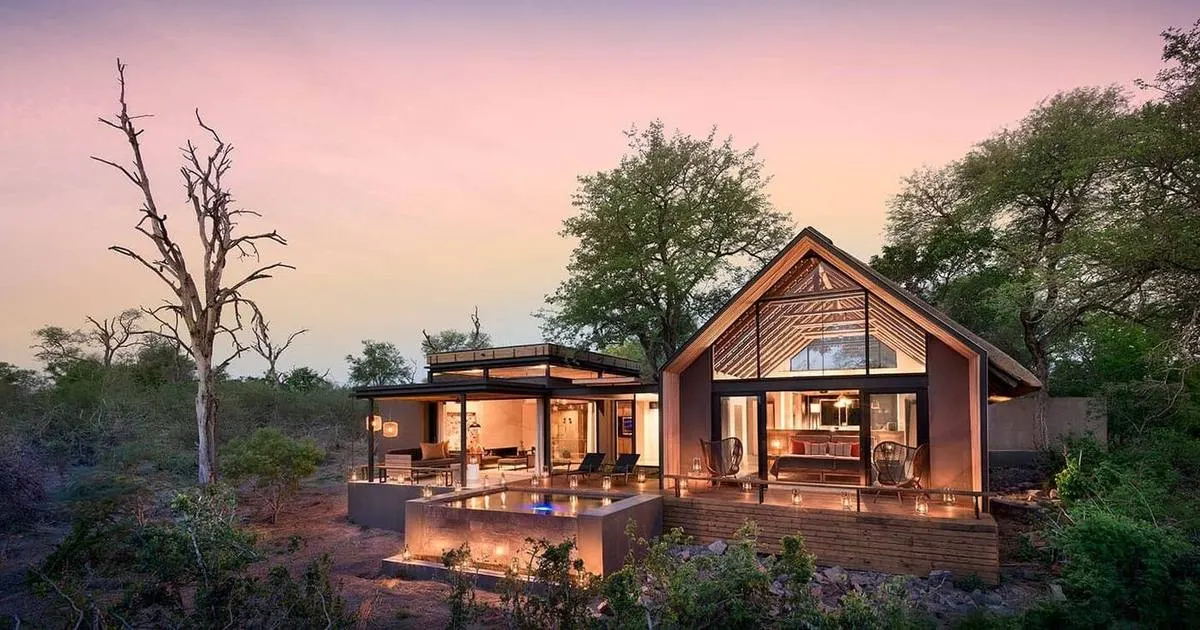
Cape Town, Franschhoek
From $7,490
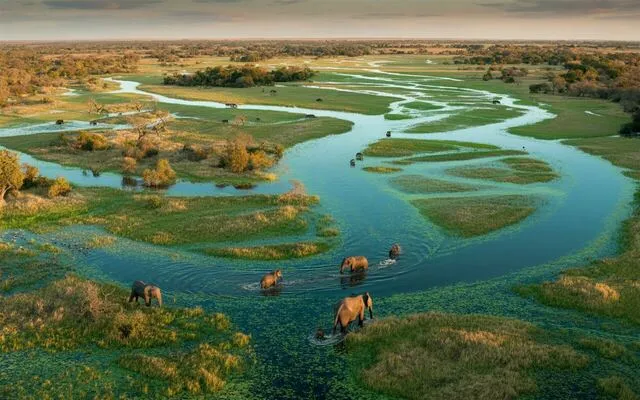
Cape Town, Sabi Sands
From $8,990
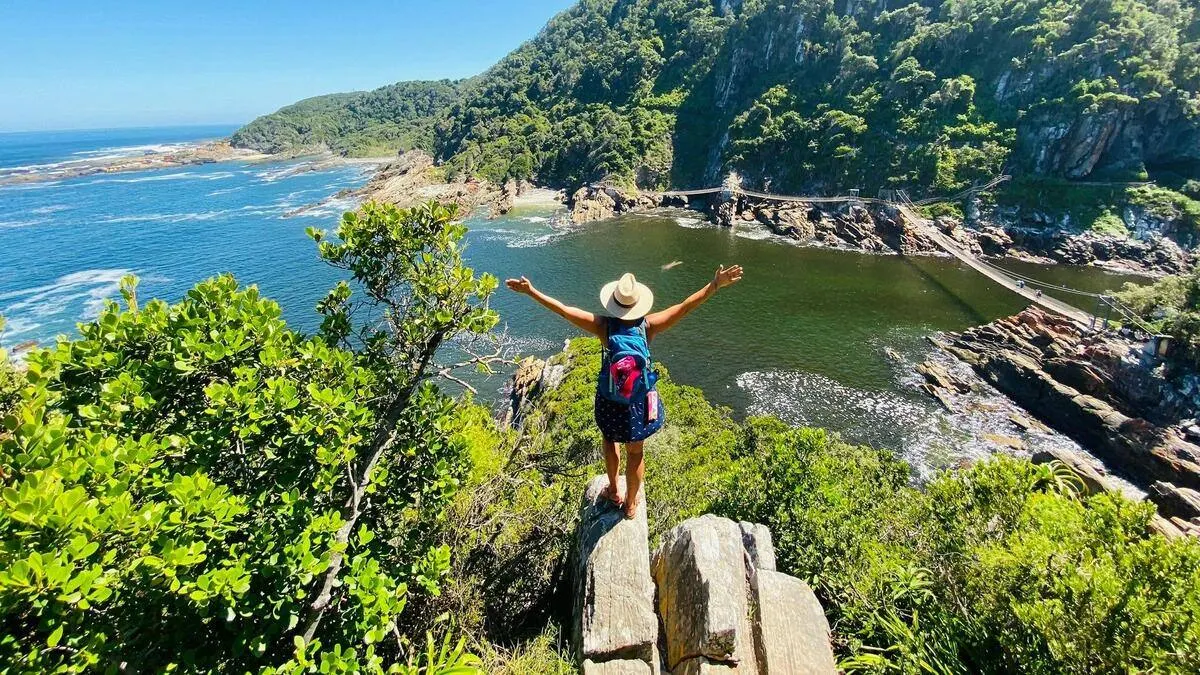
Cape Town, Hermanus
From $3,890
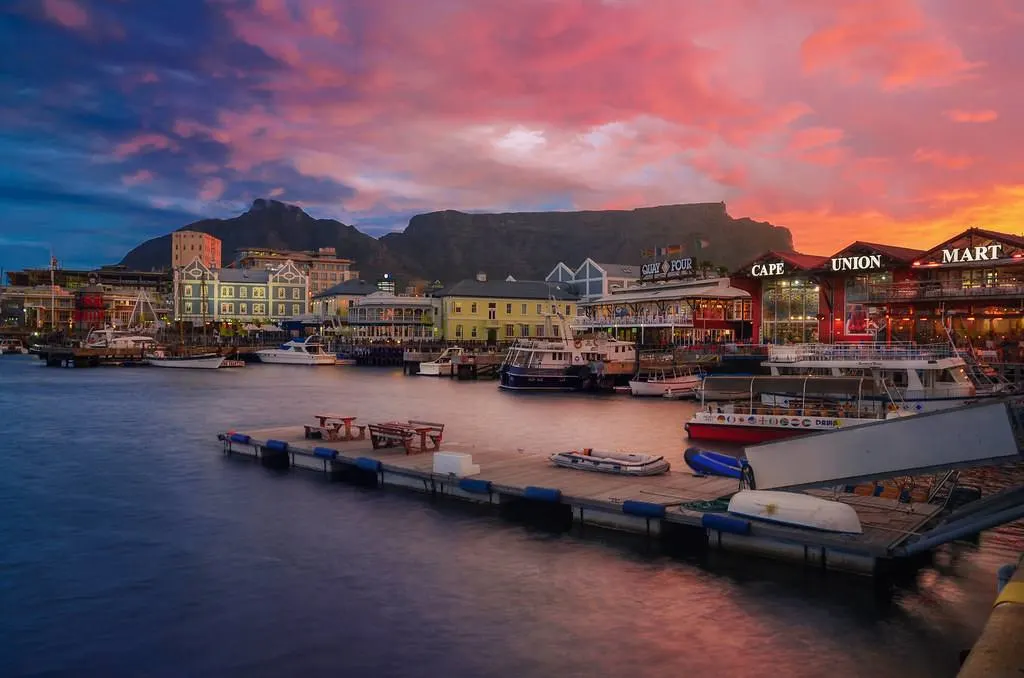
Cape Town, Garden Route
From $11,990
Our expert safari consultants will craft your perfect humpback whale encounter — from choosing the ideal reserve to selecting the best season and lodge.
Big Five game drives, walking safaris & more
Luxury accommodation in prime wildlife areas
Kruger, Sabi Sands, Masai Mara & beyond
Plan your trip around peak wildlife seasons
Honest pricing guide for every budget
How your safari protects African wildlife
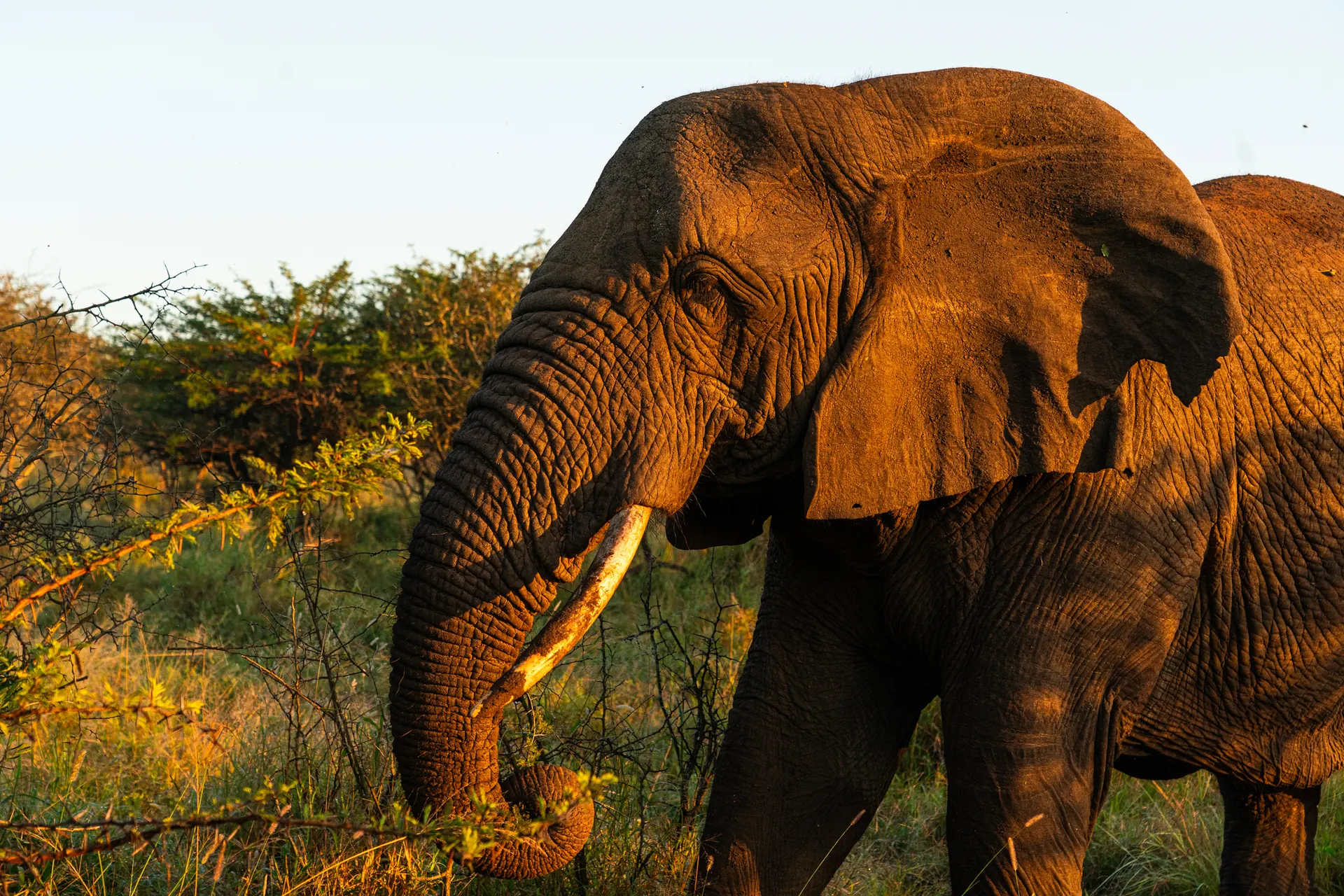
African Elephant
The Gentle Giants of the African Bush

African Lion
The King of the African Savanna

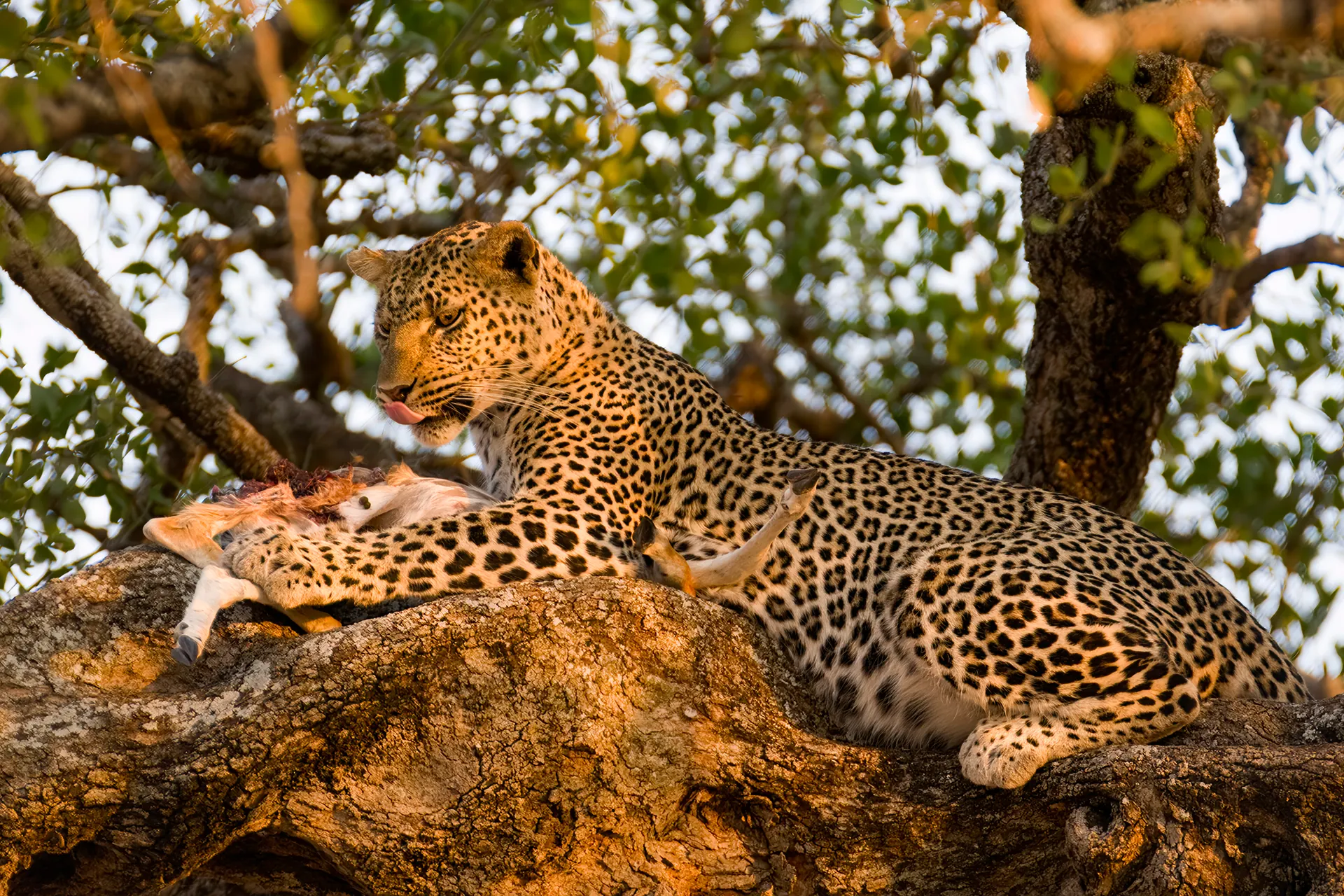
African Leopard
The Elusive Ghost of the Bush
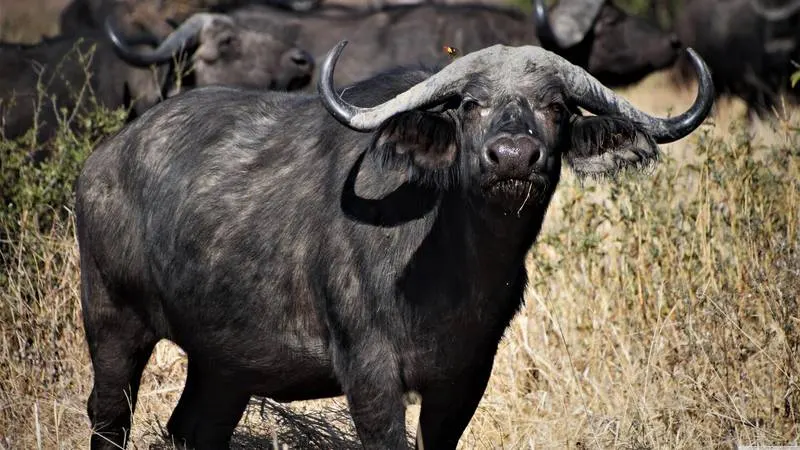
Cape Buffalo
Africa's Most Dangerous Bovine
White Rhinoceros
Guardians of the Grassland
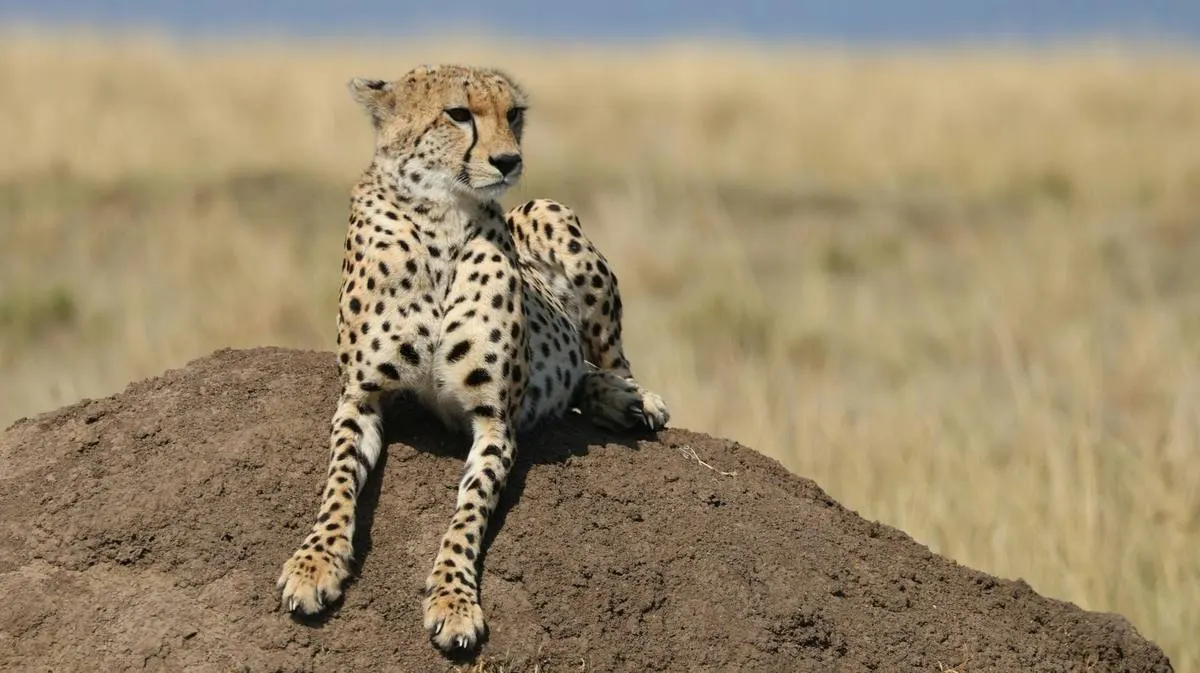
Cheetah
The Fastest Animal on Land
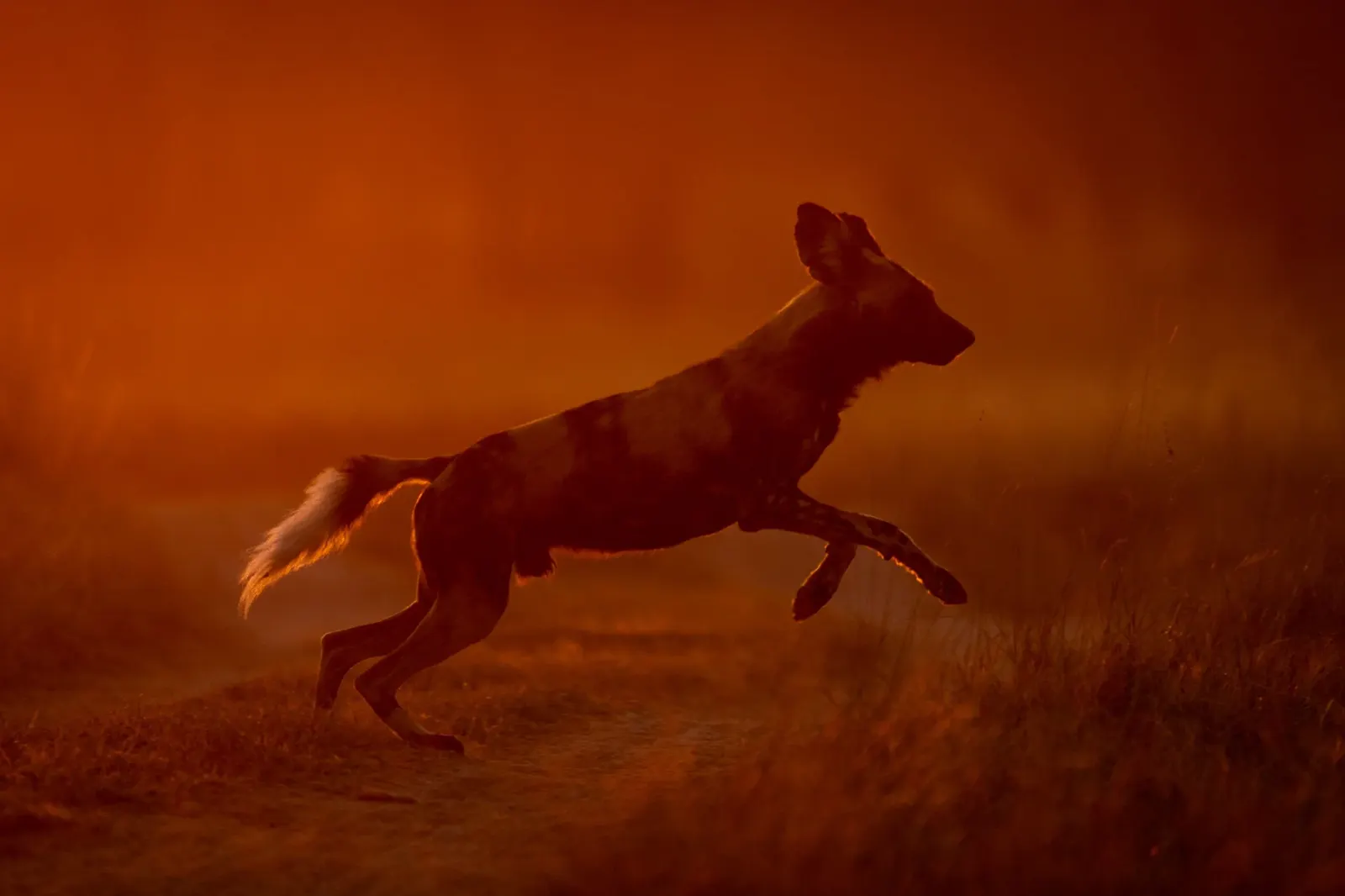
African Wild Dog
Africa's Most Efficient Predator
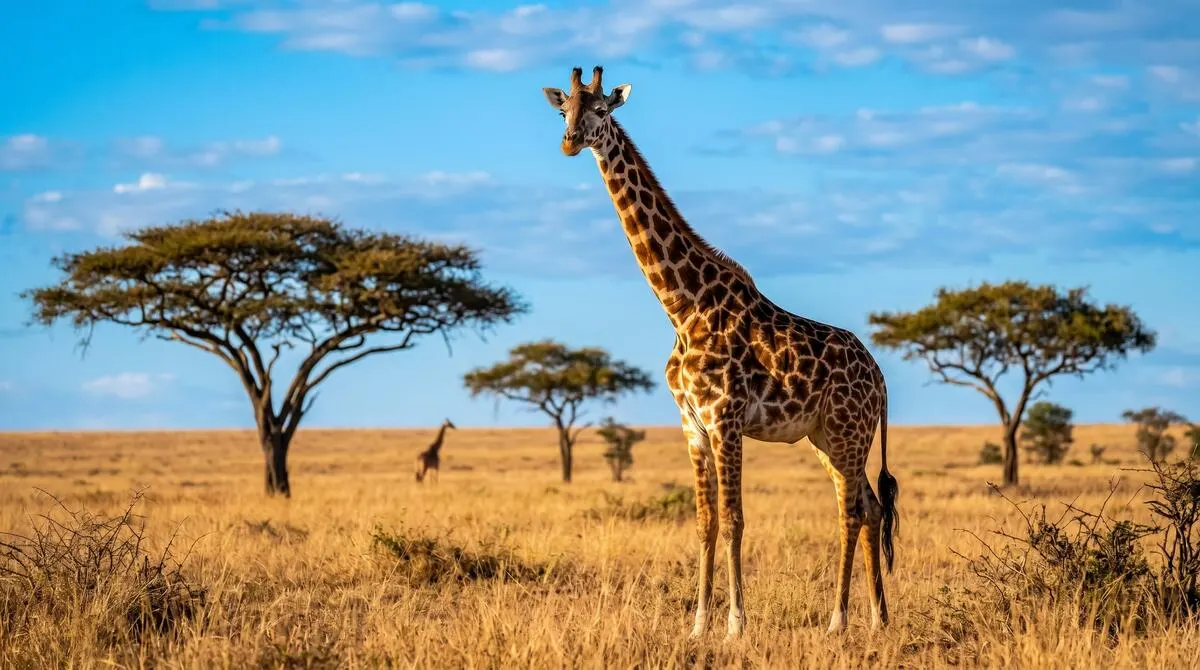
South African Giraffe
The Tallest Animal on Earth